Landscape Painting Reproductions - Page 17
Landscape painting is a genre that takes the outdoor environment as its principal subject, exploring natural scenery and places shaped by cultivation, settlement, and human activity. A mountain range, a riverside path, or a garden can provide its organizing motif. The view may record an identifiable place, combine observations from several locations, or arise from imagination. Landscape belongs to many periods and styles; its continuity rests on its subject, without requiring a shared technique or artistic program.
The position of the horizon helps determine a landscape’s character. A low horizon gives the sky greater presence, while an elevated viewpoint can reveal an extensive arrangement of fields, waterways, and settlements. Overlapping forms, diminishing scale, and softer contrasts suggest distance; faraway mountains often appear cooler and paler. A foreground tree can anchor the composition, while a small figure makes the surrounding space seem immense. These decisions establish relationships between the viewer and the depicted terrain, giving each painting a particular way of directing attention.
In China, landscape acquired exceptional cultural prestige, with major achievements during the Song dynasty (960-1279). The term shan shui, “mountain-water,” names a tradition in which brushwork gives rocks, vegetation, and mist a distinct pictorial rhythm. Fan Kuan’s “Travelers among Mountains and Streams” (11th century, National Palace Museum, Taipei) sets a tiny procession beneath a towering mountain. Dense marks articulate its rocky face, while lighter intervals separate successive spatial zones. Such paintings invited sustained contemplation of nature and humanity’s place within it, making the character of the brushstroke central to the experience of looking.
European landscape had precedents in Roman wall painting and developed through medieval calendar illustrations and the settings of religious images. During the 16th century, Joachim Patinir organized sweeping panoramas viewed from above, bringing mountains, rivers, and settlements into an encompassing composition. Pieter Bruegel the Elder gave seasonal change and rural activity extraordinary breadth. In “Hunters in the Snow” (1565, Kunsthistorisches Museum, Vienna), dark foreground trees and returning hunters lead the eye toward a village, frozen ponds, and distant peaks. The winter landscape holds many simultaneous activities within a carefully ordered expanse.
In the Dutch Republic, the 17th century brought a flourishing market for landscape and increasingly specialized painters. Jan van Goyen and Jacob van Ruisdael explored dunes, waterways, woodland, and the changing weight of cloudy skies. Meindert Hobbema’s “The Avenue at Middelharnis” (1689, National Gallery, London) draws the eye along a road bordered by tall, pruned trees. Its emphatic recession is balanced by fields and cultivated plots extending sideways. A gardener at work makes human care of the land part of the subject: this apparently quiet countryside bears the visible marks of labor.
A different strand developed in 17th-century Rome, where Claude Lorrain and Nicolas Poussin created landscapes organized around classical ideals. Their compositions drew on the Italian countryside and arranged trees, water, hills, and buildings into measured relationships. Claude often gave distant light a unifying role; Poussin used the weight and placement of forms to support narrative and intellectual order. Biblical or mythological figures connected these works with history painting, which occupied a higher rank in academic theory. Observation and invention worked together within the finished image.
During the early 19th century, Romantic painters intensified the emotional and spiritual possibilities of the genre. Caspar David Friedrich placed solitary figures before distant horizons, mountains, or mist, making the act of looking part of the subject. Ruins and seasonal changes could suggest transience, belief, or uncertainty. J. M. W. Turner explored light, storms, and the instability of visible form. In many of his landscapes, recognizable contours yield to atmospheric movement, and the viewer encounters nature as a force that exceeds ordinary human control.
John Constable grounded his landscapes in an intimate knowledge of the English countryside. “The Hay Wain” (1821, National Gallery, London) depicts the millpond at Flatford on the River Stour, with a wagon in the water beside a cottage and dense vegetation. Constable painted the finished canvas in his London studio, drawing on earlier studies. Its freshness emerged through a process combining direct observation and considered composition. This distinction matters throughout the genre: outdoor work could supply material for paintings developed elsewhere. Exhibited at the Paris Salon in 1824, the picture contributed to Constable’s success, which included the award of a gold medal.
Landscape also helped define ideas of place and nation. In the United States, Thomas Cole and later Frederic Edwin Church and Albert Bierstadt developed ambitious panoramas associated with the Hudson River School. Travel studies became the basis for carefully constructed studio paintings, whose scale gave scenery a monumental presence. In Russia, Ivan Shishkin investigated the structure and density of forests, while Isaac Levitan found expressive possibilities in quieter motifs. A river bend, a stretch of meadow, or the approach of autumn could carry a painting’s emotional weight.
In France, Camille Corot and the painters associated with Barbizon made close attention to particular places central to their practice. The Impressionists Claude Monet, Camille Pissarro, and Alfred Sisley subsequently explored how light and weather changed familiar surroundings. Monet’s “The Magpie” (1868-1869, Musée d’Orsay, Paris) builds a winter scene from subtly differentiated whites and cool shadows. The small bird provides a dark accent within the snowy expanse. Changing illumination became a substantial subject in itself, while work outdoors gained increasing importance for the painter’s handling of color and the immediacy of the painted surface.
Later artists used landscape to reconsider the construction of painting itself. Paul Cézanne repeatedly returned to Mont Sainte-Victoire, testing how planes of color could establish depth while preserving the visibility of the painted surface. Vincent van Gogh gave fields and trees a charged rhythm through directional brushwork. Georgia O’Keeffe drew strong, simplified forms from the hills and cliffs of New Mexico, and David Hockney explored Yorkshire roads and woodland through changing seasons. A familiar site could support many different pictures: altering the viewpoint, the color relationships, or the scale of a motif changed how the landscape was understood.
page 17 of 361
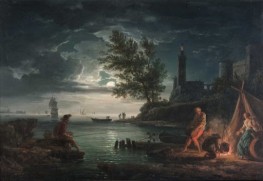
SKU: VCL-21984
Claude-Joseph Vernet
Original Size: 29.5 x 43.5 cm
Art Gallery of New South Wales, Sydney, Australia
Claude-Joseph Vernet
Original Size: 29.5 x 43.5 cm
Art Gallery of New South Wales, Sydney, Australia
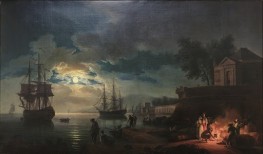
SKU: VCL-21983
Claude-Joseph Vernet
Original Size: 97.2 x 163.5 cm
Museo Soumaya, Mexico City, Mexico
Claude-Joseph Vernet
Original Size: 97.2 x 163.5 cm
Museo Soumaya, Mexico City, Mexico
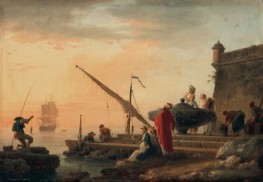
SKU: VCL-21980
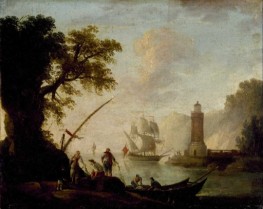
Claude-Joseph Vernet
Original Size: 104.4 x 117.8 cm
Dulwich Picture Gallery, London, UK
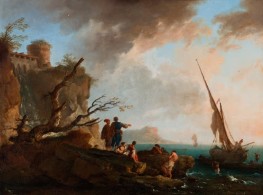
Claude-Joseph Vernet
Original Size: 104.4 x 117.8 cm
Dulwich Picture Gallery, London, UK
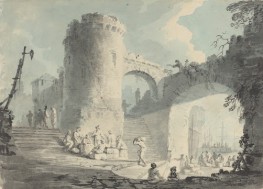
SKU: VCL-21977
Claude-Joseph Vernet
Original Size: 23.8 x 33.1 cm
National Gallery of Art, Washington, USA
Claude-Joseph Vernet
Original Size: 23.8 x 33.1 cm
National Gallery of Art, Washington, USA
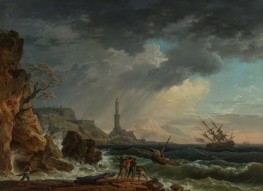
SKU: VCL-21976
Claude-Joseph Vernet
Original Size: 98.2 x 135.5 cm
Staatliche Kunsthalle Karlsruhe, Germany
Claude-Joseph Vernet
Original Size: 98.2 x 135.5 cm
Staatliche Kunsthalle Karlsruhe, Germany
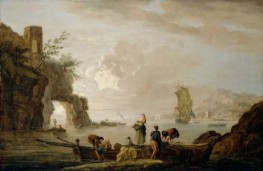
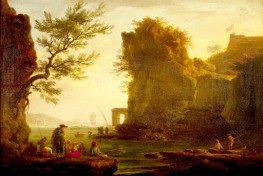
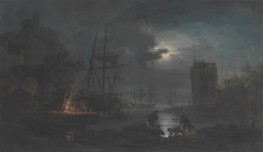
SKU: VCL-21973
Claude-Joseph Vernet
Original Size: 36.5 x 62.4 cm
Metropolitan Museum of Art, New York, USA
Claude-Joseph Vernet
Original Size: 36.5 x 62.4 cm
Metropolitan Museum of Art, New York, USA
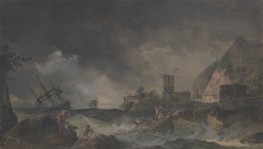
SKU: VCL-21972
Claude-Joseph Vernet
Original Size: 35.9 x 62.9 cm
Metropolitan Museum of Art, New York, USA
Claude-Joseph Vernet
Original Size: 35.9 x 62.9 cm
Metropolitan Museum of Art, New York, USA
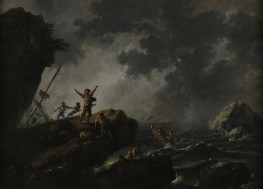
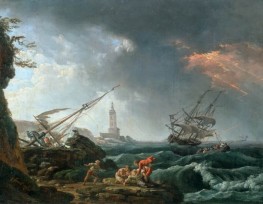
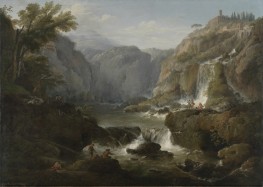
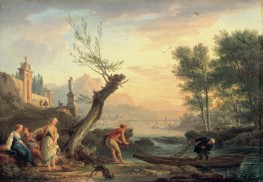
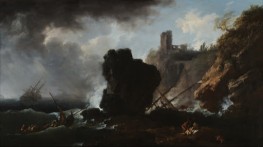
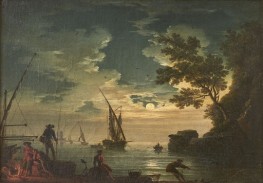
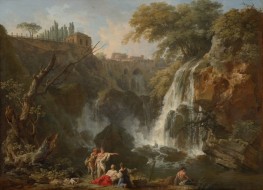
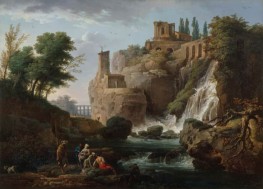
The Waterfalls at Tivoli with the Villa of Maecenas c. 1740-1750
Claude-Joseph VernetOil Painting
$6109
$6109
Canvas Print
$66.49
$66.49
SKU: VCL-21965
Claude-Joseph Vernet
Original Size: 101 x 138 cm
Mauritshuis Royal Picture Gallery, The Hague, Netherlands
Claude-Joseph Vernet
Original Size: 101 x 138 cm
Mauritshuis Royal Picture Gallery, The Hague, Netherlands
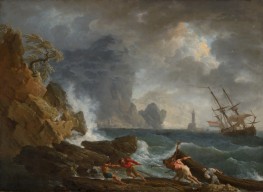
An Italian Harbor in Stormy Weather c.1740/50
Claude-Joseph VernetOil Painting
$6109
$6109
Canvas Print
$67.32
$67.32
SKU: VCL-21964
Claude-Joseph Vernet
Original Size: 101 x 138 cm
Mauritshuis Royal Picture Gallery, The Hague, Netherlands
Claude-Joseph Vernet
Original Size: 101 x 138 cm
Mauritshuis Royal Picture Gallery, The Hague, Netherlands
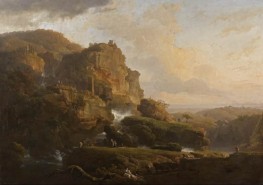
SKU: VCL-21961
Claude-Joseph Vernet
Original Size: 123.8 x 174 cm
Dulwich Picture Gallery, London, UK
Claude-Joseph Vernet
Original Size: 123.8 x 174 cm
Dulwich Picture Gallery, London, UK
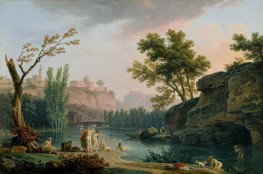
SKU: VCL-21960
Claude-Joseph Vernet
Original Size: 89 x 133 cm
National Museum of Western Art, Tokyo, Japan
Claude-Joseph Vernet
Original Size: 89 x 133 cm
National Museum of Western Art, Tokyo, Japan