Landscape Painting Reproductions - Page 22
Landscape painting is a genre of art that depicts outdoor scenes, such as mountains, forests, rivers, and gardens. The history of landscape painting dates back to ancient times, with examples from ancient Egyptian, Greek, and Roman art. During the Middle Ages, landscape paintings were mainly used as backgrounds for religious scenes, and it was not until the Renaissance that landscape painting emerged as a separate genre.
During the Renaissance, artists started to focus more on the natural world and began to experiment with perspective, light and shadow, and atmospheric effects in their landscapes. This period also saw the rise of topographical painting, which depicted accurate views of specific locations. During this time, artists such as Leonardo da Vinci and Albrecht Dürer produced iconic landscape paintings.
The 17th century Dutch Golden Age saw a trend towards landscapes that were more genre-like and less topographical, with scenes of everyday life and landscapes with rolling hills, waterways, and windmills. This period is also known for the development of the "Dutch light" style, which was characterized by a luminous, highly transparent quality of light and a preference for sunny skies. Painters such as Jan van Goyen and Jacob van Ruisdael became renowned for their realistic landscapes.
In the 18th and 19th centuries, Romanticism and the interest in the Sublime in art and literature led to a focus on dramatic, awe-inspiring landscapes. Painters such as J.M.W. Turner and Caspar David Friedrich used dramatic light, color, and form to evoke a sense of awe and drama in their landscapes.
The Impressionist movement of the late 19th century was characterized by its loose brushwork, light color palette, and emphasis on capturing the fleeting effects of light and atmosphere. Impressionist landscapes, such as those by Claude Monet and Pierre-Auguste Renoir, often depicted modern life, with leisurely scenes of parks, gardens, and the countryside.
Throughout the 20th century, landscape painting continued to evolve and diversify, with many artists pushing the boundaries of the genre through new styles and techniques. Some notable examples include the abstract landscapes of artists such as Mark Rothko and Joan Mitchell, and the photorealistic landscapes of Richard Estes and Ralph Goings.
Overall, landscape painting has a rich and varied history, reflecting the changing attitudes and perspectives of different cultures and time periods.
During the Renaissance, artists started to focus more on the natural world and began to experiment with perspective, light and shadow, and atmospheric effects in their landscapes. This period also saw the rise of topographical painting, which depicted accurate views of specific locations. During this time, artists such as Leonardo da Vinci and Albrecht Dürer produced iconic landscape paintings.
The 17th century Dutch Golden Age saw a trend towards landscapes that were more genre-like and less topographical, with scenes of everyday life and landscapes with rolling hills, waterways, and windmills. This period is also known for the development of the "Dutch light" style, which was characterized by a luminous, highly transparent quality of light and a preference for sunny skies. Painters such as Jan van Goyen and Jacob van Ruisdael became renowned for their realistic landscapes.
In the 18th and 19th centuries, Romanticism and the interest in the Sublime in art and literature led to a focus on dramatic, awe-inspiring landscapes. Painters such as J.M.W. Turner and Caspar David Friedrich used dramatic light, color, and form to evoke a sense of awe and drama in their landscapes.
The Impressionist movement of the late 19th century was characterized by its loose brushwork, light color palette, and emphasis on capturing the fleeting effects of light and atmosphere. Impressionist landscapes, such as those by Claude Monet and Pierre-Auguste Renoir, often depicted modern life, with leisurely scenes of parks, gardens, and the countryside.
Throughout the 20th century, landscape painting continued to evolve and diversify, with many artists pushing the boundaries of the genre through new styles and techniques. Some notable examples include the abstract landscapes of artists such as Mark Rothko and Joan Mitchell, and the photorealistic landscapes of Richard Estes and Ralph Goings.
Overall, landscape painting has a rich and varied history, reflecting the changing attitudes and perspectives of different cultures and time periods.
page 22 of 313
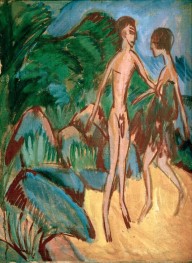
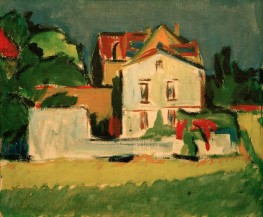
SKU: KEL-21200
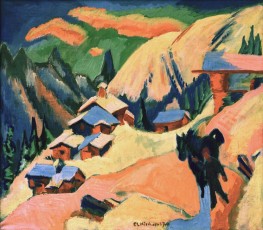
Ernst Ludwig Kirchner
Original Size: 61 x 71.8 cm
Hamburger Kunsthalle, Hamburg, Germany
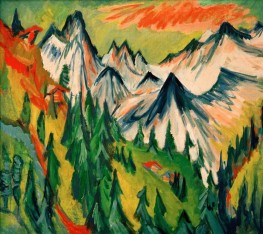
Ernst Ludwig Kirchner
Original Size: 61 x 71.8 cm
Hamburger Kunsthalle, Hamburg, Germany
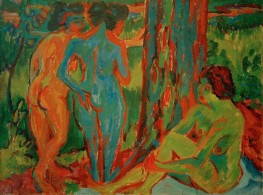
SKU: KEL-21187
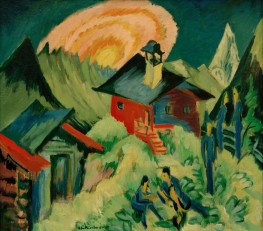
Ernst Ludwig Kirchner
Original Size: 76 x 100 cm
Stedelijk Museum, Amsterdam, Netherlands
Ernst Ludwig Kirchner
Original Size: 76 x 100 cm
Stedelijk Museum, Amsterdam, Netherlands
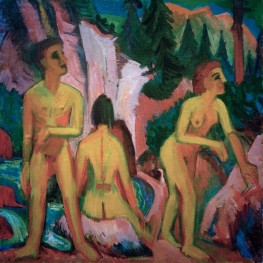
SKU: KEL-21185
Ernst Ludwig Kirchner
Original Size: 150 x 150 cm
Haags Gemeentemuseum, The Hague, Netherlands
Ernst Ludwig Kirchner
Original Size: 150 x 150 cm
Haags Gemeentemuseum, The Hague, Netherlands
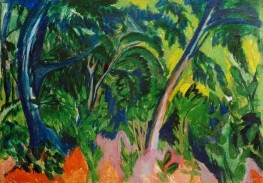
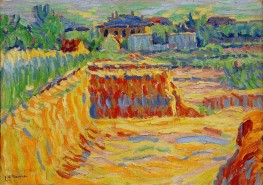
SKU: KEL-21170
Ernst Ludwig Kirchner
Original Size: 51 x 71 cm
Thyssen-Bornemisza Museum, Madrid, Spain
Ernst Ludwig Kirchner
Original Size: 51 x 71 cm
Thyssen-Bornemisza Museum, Madrid, Spain
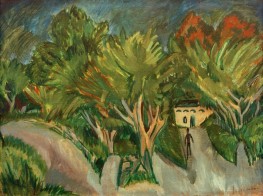
SKU: KEL-21162
Ernst Ludwig Kirchner
Original Size: 90.5 x 121 cm
Old Masters Gallery, Berlin, Germany
Ernst Ludwig Kirchner
Original Size: 90.5 x 121 cm
Old Masters Gallery, Berlin, Germany
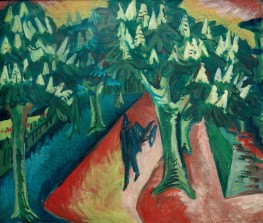
SKU: KEL-21160
Ernst Ludwig Kirchner
Original Size: 70.5 x 80.5 cm
LWL-Museum für Kunst und Kultur, Munster, Germany
Ernst Ludwig Kirchner
Original Size: 70.5 x 80.5 cm
LWL-Museum für Kunst und Kultur, Munster, Germany
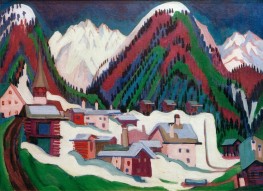
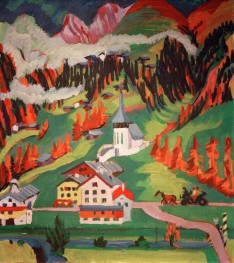
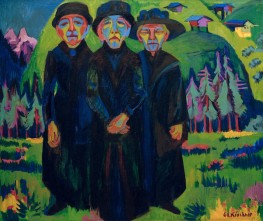
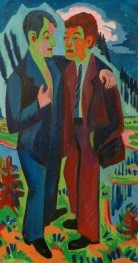
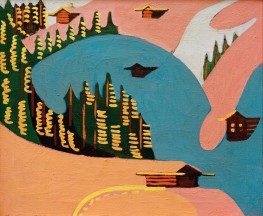
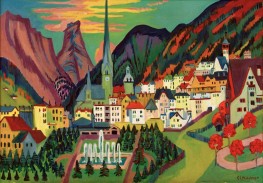
Davos with Church. Davos in the Summer 1925
Ernst Ludwig KirchnerOil Painting
$1438
$1438
Canvas Print
$69.28
$69.28
SKU: KEL-21107
Ernst Ludwig Kirchner
Original Size: 121 x 170.5 cm
Kirchner Museum, Davos, Switzerland
Ernst Ludwig Kirchner
Original Size: 121 x 170.5 cm
Kirchner Museum, Davos, Switzerland
SKU: KEL-21093
Ernst Ludwig Kirchner
Original Size: 120.5 x 151 cm
Staatliche Kunsthalle, Karlsruhe, Germany
Ernst Ludwig Kirchner
Original Size: 120.5 x 151 cm
Staatliche Kunsthalle, Karlsruhe, Germany
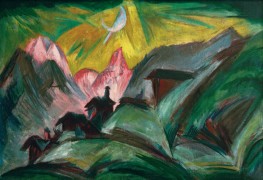
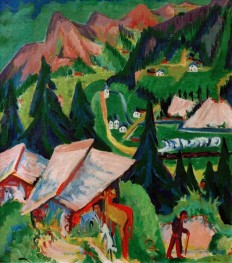
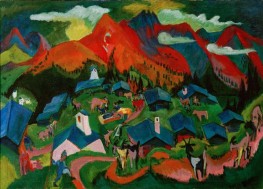
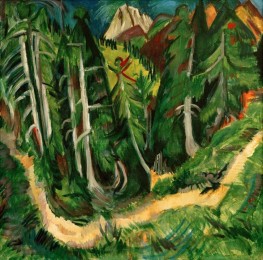
SKU: KEL-21089
Ernst Ludwig Kirchner
Original Size: 119 x 119 cm
Kunstmuseum, Winterthur, Switzerland
Ernst Ludwig Kirchner
Original Size: 119 x 119 cm
Kunstmuseum, Winterthur, Switzerland