
Claude Lorrain Painting Reproductions 1 of 4
c.1602-1682
French Baroque Painter
At dawn and toward evening, when Roman light stretches furthest across fields and water, Claude Lorrain went outdoors to draw. That habit became central to an art in which sunlight itself could seem the true subject. Claude Lorrain, born Claude Gellée around 1600 - perhaps as late as 1604 or 1605 - in Chamagne in the Duchy of Lorraine, and dead in Rome on 23 November 1682, became one of the defining landscape painters of the Baroque age. Though now generally described as French, he spent almost his entire working life in Italy and was long regarded as a painter of the Roman School.
His beginnings remain unusually uncertain. Claude was the third of five sons of Jean Gellée and Anne Padose, and two early biographers who knew him personally gave strikingly different accounts of his youth. Filippo Baldinucci wrote that Claude lost both parents at twelve, lived with an elder brother in Freiburg, and learned the rudiments of drawing from him before travelling to Italy. Joachim von Sandrart instead described an unsuccessful schoolboy apprenticed to a pastry baker, who reached Rome in the company of cooks and eventually entered the household of the painter Agostino Tassi as servant and cook. Modern scholarship cannot entirely reconcile these stories. What is clearer is that Claude worked with the landscapist Goffredo Wals in Naples around 1620–22 and with Tassi in Rome from about 1622 or 1623 until 1625.
Those apprenticeships placed him inside an already rich tradition of Roman landscape. Northern painters such as Paul Bril had helped establish panoramic settings in which human figures became subordinate to woods, hills, ruins and distant views. Adam Elsheimer had shown how small cabinet pictures could invest landscape with atmosphere, while Domenichino and Annibale Carracci brought balance, classical order and narrative dignity to the genre. Tassi, whose large workshop specialized in decorative fresco schemes, offered Claude practical experience on a more expansive scale. From these sources he developed something increasingly personal: landscapes organized with exceptional compositional control, yet made convincing by sustained observation of natural light.
In 1625 Claude travelled back toward Lorraine and worked briefly with Claude Deruet, apparently painting landscape backgrounds for a fresco decoration that has since disappeared. By 1626 or 1627 he had returned to Rome. He settled near the Via Margutta, close to the Spanish Steps and Trinità dei Monti, and remained in that neighbourhood for the rest of his life. Journeys through Marseille, Genoa and Venice, together with experience of France, Italy and Bavaria, broadened his visual memory. Sandrart, who knew him in the late 1620s and at one point lived with him, recalled his practice of working outdoors, especially at dawn and dusk, making studies directly from nature.
Landscape with Cattle and Peasants of 1629, now in the Philadelphia Museum of Art, is his earliest dated painting and already reveals an assured command of spatial recession and atmospheric unity. Early pictures often contained more figures than his mature works, including shepherds, travellers and sailors. Religious and mythological subjects soon entered the repertory: a Flight into Egypt probably dates from about 1631, while Judgement of Paris belongs to the same early phase. Harbour scenes also appeared quickly and would remain essential to Claude Lorrain's art for half a century.
Success came rapidly. The French ambassador in Rome commissioned him in 1633, followed by work for Philip IV of Spain in 1634–35. Cardinal Guido Bentivoglio, impressed by two landscapes, recommended him to Pope Urban VIII. Between 1635 and 1638 Claude produced four paintings for the Pope, two large canvases and two smaller works on copper. By the end of the decade he had become the leading landscape specialist in Italy, commanding substantial prices and attracting Italian and international patrons.
Around 1636 he began one of the most revealing documents left by any seventeenth-century painter. In the Liber Veritatis, or Book of Truth, Claude made pen-and-wash drawings recording nearly every completed painting and frequently noted the purchaser on the reverse. The surviving series of 195 sheets, now in the British Museum, acted partly as a record of authorship and partly as an extraordinary visual catalogue of his development. Alongside it stood a much broader practice as a draughtsman. He produced numerous landscape sketches made before nature, compositional studies connected with paintings, and carefully finished records. More than forty etchings, mostly made before 1642, formed another strand of his activity, although his drawings would ultimately be valued far more highly.
During the 1640s his compositions grew in scale and became more refined. Human action receded while architecture, water, trees and immense zones of luminous atmosphere assumed greater weight. In Seaport at Sunset of 1639, now in the Louvre, and The Embarkation of the Queen of Sheba of 1648 in the National Gallery, London, Claude did something still startling: he placed the sun itself within the pictorial field. Light streams outward, dissolving contours and binding ships, buildings, water and sky into a single atmospheric structure. Few earlier painters had made direct sunlight such an organizing force.
His architecture was rarely archaeological reconstruction. Classical temples, palaces and arcades were assembled imaginatively from Roman buildings, Renaissance façades and invented forms. A View of Rome of 1632 combines recognizable aspects of the city with imaginary antiquity, while later harbour scenes place ancient narratives amid buildings and ships that could belong equally to Claude's own century. Historical exactitude mattered less than pictorial coherence. Using carefully balanced axes and, at times, underlying systems of median and diagonal lines, he distributed architecture, foliage and open space so that the eye moves naturally toward a luminous distance.
Figures remained his acknowledged weakness. Claude joked, according to Baldinucci, that buyers paid for the landscapes and received the figures free. He nevertheless studied the human body repeatedly, and virtually every painting contains figures, however small. Their presence also served a practical purpose. Biblical and classical protagonists allowed landscape to enter the prestigious territory of history painting: saints, heroes and demigods gave narrative legitimacy to scenes whose deepest interest plainly lay elsewhere. In his drawings, freed from that requirement, his fascination with scenery becomes still more evident.
In 1650 Claude moved to a neighbouring house in the Via Paolina, now Via del Babuino. He never married. In 1658 he adopted an orphan, Agnese, who may have been his daughter, and nephews later joined the household. Gout troubled him severely, and in 1663 an illness became serious enough for him to make a will. He recovered, although his production declined after 1670. Even so, late commissions remained ambitious. Coast View with Perseus and the Origin of Coral, painted in 1674 for Cardinal Camillo Massimo, and the extraordinary Ascanius Shooting the Stag of Sylvia, commissioned by Prince Lorenzo Onofrio Colonna and completed in 1682, belong to the closing phase of his career. In the last painting the elongated hunters seem almost fragile against the scale and gravity of the surrounding landscape.
Claude died at his Roman home on 23 November 1682. He was buried first at Trinità dei Monti; in 1840 his remains were transferred to San Luigi dei Francesi. Remarkably, he owned only four of his own paintings at death, but retained a large body of drawings, including bound sketchbooks devoted to Tivoli, the Campagna, animals and other subjects. Their later dispersal has not erased the sense of an artist who looked persistently and methodically at the world around him.
His achievement lies less in inventing landscape painting than in changing its emotional and pictorial authority. Claude Lorrain transformed the countryside and seaport into measured theatres of light, where human history seems momentary beside the continuity of earth, water and sky. Later English collectors sought his paintings avidly, and artists responded with equal intensity. John Constable praised the repose of Claude's sunlight; centuries after the painter's death, his visions could still suggest an ideal world suspended between memory and nature. That sensation remains persuasive. In front of a great Claude, narrative may supply the title, but light determines what we remember.
His beginnings remain unusually uncertain. Claude was the third of five sons of Jean Gellée and Anne Padose, and two early biographers who knew him personally gave strikingly different accounts of his youth. Filippo Baldinucci wrote that Claude lost both parents at twelve, lived with an elder brother in Freiburg, and learned the rudiments of drawing from him before travelling to Italy. Joachim von Sandrart instead described an unsuccessful schoolboy apprenticed to a pastry baker, who reached Rome in the company of cooks and eventually entered the household of the painter Agostino Tassi as servant and cook. Modern scholarship cannot entirely reconcile these stories. What is clearer is that Claude worked with the landscapist Goffredo Wals in Naples around 1620–22 and with Tassi in Rome from about 1622 or 1623 until 1625.
Those apprenticeships placed him inside an already rich tradition of Roman landscape. Northern painters such as Paul Bril had helped establish panoramic settings in which human figures became subordinate to woods, hills, ruins and distant views. Adam Elsheimer had shown how small cabinet pictures could invest landscape with atmosphere, while Domenichino and Annibale Carracci brought balance, classical order and narrative dignity to the genre. Tassi, whose large workshop specialized in decorative fresco schemes, offered Claude practical experience on a more expansive scale. From these sources he developed something increasingly personal: landscapes organized with exceptional compositional control, yet made convincing by sustained observation of natural light.
In 1625 Claude travelled back toward Lorraine and worked briefly with Claude Deruet, apparently painting landscape backgrounds for a fresco decoration that has since disappeared. By 1626 or 1627 he had returned to Rome. He settled near the Via Margutta, close to the Spanish Steps and Trinità dei Monti, and remained in that neighbourhood for the rest of his life. Journeys through Marseille, Genoa and Venice, together with experience of France, Italy and Bavaria, broadened his visual memory. Sandrart, who knew him in the late 1620s and at one point lived with him, recalled his practice of working outdoors, especially at dawn and dusk, making studies directly from nature.
Landscape with Cattle and Peasants of 1629, now in the Philadelphia Museum of Art, is his earliest dated painting and already reveals an assured command of spatial recession and atmospheric unity. Early pictures often contained more figures than his mature works, including shepherds, travellers and sailors. Religious and mythological subjects soon entered the repertory: a Flight into Egypt probably dates from about 1631, while Judgement of Paris belongs to the same early phase. Harbour scenes also appeared quickly and would remain essential to Claude Lorrain's art for half a century.
Success came rapidly. The French ambassador in Rome commissioned him in 1633, followed by work for Philip IV of Spain in 1634–35. Cardinal Guido Bentivoglio, impressed by two landscapes, recommended him to Pope Urban VIII. Between 1635 and 1638 Claude produced four paintings for the Pope, two large canvases and two smaller works on copper. By the end of the decade he had become the leading landscape specialist in Italy, commanding substantial prices and attracting Italian and international patrons.
Around 1636 he began one of the most revealing documents left by any seventeenth-century painter. In the Liber Veritatis, or Book of Truth, Claude made pen-and-wash drawings recording nearly every completed painting and frequently noted the purchaser on the reverse. The surviving series of 195 sheets, now in the British Museum, acted partly as a record of authorship and partly as an extraordinary visual catalogue of his development. Alongside it stood a much broader practice as a draughtsman. He produced numerous landscape sketches made before nature, compositional studies connected with paintings, and carefully finished records. More than forty etchings, mostly made before 1642, formed another strand of his activity, although his drawings would ultimately be valued far more highly.
During the 1640s his compositions grew in scale and became more refined. Human action receded while architecture, water, trees and immense zones of luminous atmosphere assumed greater weight. In Seaport at Sunset of 1639, now in the Louvre, and The Embarkation of the Queen of Sheba of 1648 in the National Gallery, London, Claude did something still startling: he placed the sun itself within the pictorial field. Light streams outward, dissolving contours and binding ships, buildings, water and sky into a single atmospheric structure. Few earlier painters had made direct sunlight such an organizing force.
His architecture was rarely archaeological reconstruction. Classical temples, palaces and arcades were assembled imaginatively from Roman buildings, Renaissance façades and invented forms. A View of Rome of 1632 combines recognizable aspects of the city with imaginary antiquity, while later harbour scenes place ancient narratives amid buildings and ships that could belong equally to Claude's own century. Historical exactitude mattered less than pictorial coherence. Using carefully balanced axes and, at times, underlying systems of median and diagonal lines, he distributed architecture, foliage and open space so that the eye moves naturally toward a luminous distance.
Figures remained his acknowledged weakness. Claude joked, according to Baldinucci, that buyers paid for the landscapes and received the figures free. He nevertheless studied the human body repeatedly, and virtually every painting contains figures, however small. Their presence also served a practical purpose. Biblical and classical protagonists allowed landscape to enter the prestigious territory of history painting: saints, heroes and demigods gave narrative legitimacy to scenes whose deepest interest plainly lay elsewhere. In his drawings, freed from that requirement, his fascination with scenery becomes still more evident.
In 1650 Claude moved to a neighbouring house in the Via Paolina, now Via del Babuino. He never married. In 1658 he adopted an orphan, Agnese, who may have been his daughter, and nephews later joined the household. Gout troubled him severely, and in 1663 an illness became serious enough for him to make a will. He recovered, although his production declined after 1670. Even so, late commissions remained ambitious. Coast View with Perseus and the Origin of Coral, painted in 1674 for Cardinal Camillo Massimo, and the extraordinary Ascanius Shooting the Stag of Sylvia, commissioned by Prince Lorenzo Onofrio Colonna and completed in 1682, belong to the closing phase of his career. In the last painting the elongated hunters seem almost fragile against the scale and gravity of the surrounding landscape.
Claude died at his Roman home on 23 November 1682. He was buried first at Trinità dei Monti; in 1840 his remains were transferred to San Luigi dei Francesi. Remarkably, he owned only four of his own paintings at death, but retained a large body of drawings, including bound sketchbooks devoted to Tivoli, the Campagna, animals and other subjects. Their later dispersal has not erased the sense of an artist who looked persistently and methodically at the world around him.
His achievement lies less in inventing landscape painting than in changing its emotional and pictorial authority. Claude Lorrain transformed the countryside and seaport into measured theatres of light, where human history seems momentary beside the continuity of earth, water and sky. Later English collectors sought his paintings avidly, and artists responded with equal intensity. John Constable praised the repose of Claude's sunlight; centuries after the painter's death, his visions could still suggest an ideal world suspended between memory and nature. That sensation remains persuasive. In front of a great Claude, narrative may supply the title, but light determines what we remember.
96 Claude Lorrain Paintings
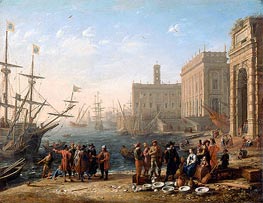
View of a Port with the Capitol c.1636
Oil Painting
$5781
$5781
Canvas Print
$74.19
$74.19
SKU: LOC-11459
Claude Lorrain
Original Size: 56 x 72 cm
Louvre Museum, Paris, France
Claude Lorrain
Original Size: 56 x 72 cm
Louvre Museum, Paris, France
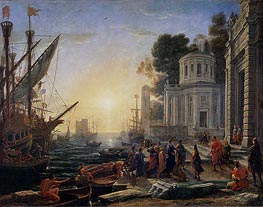
Cleopatra Disembarking at Tarsus 1642
Oil Painting
$6017
$6017
Canvas Print
$76.49
$76.49
SKU: LOC-15476
Claude Lorrain
Original Size: 119 x 168 cm
Louvre Museum, Paris, France
Claude Lorrain
Original Size: 119 x 168 cm
Louvre Museum, Paris, France
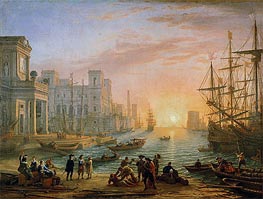
Sea Port at Sunset 1639
Oil Painting
$5396
$5396
Canvas Print
$73.48
$73.48
SKU: LOC-15477
Claude Lorrain
Original Size: 103 x 137 cm
Louvre Museum, Paris, France
Claude Lorrain
Original Size: 103 x 137 cm
Louvre Museum, Paris, France
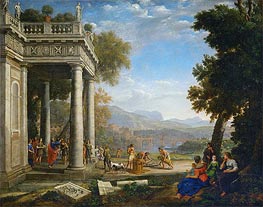
David Crowned by Samuel 1639
Oil Painting
$5280
$5280
Canvas Print
$76.49
$76.49
SKU: LOC-15478
Claude Lorrain
Original Size: 119 x 150 cm
Louvre Museum, Paris, France
Claude Lorrain
Original Size: 119 x 150 cm
Louvre Museum, Paris, France
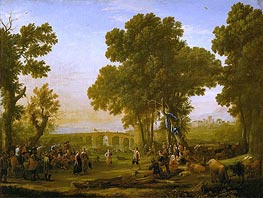
The Village Festival 1639
Oil Painting
$5236
$5236
Canvas Print
$73.13
$73.13
SKU: LOC-15479
Claude Lorrain
Original Size: 103 x 135 cm
Louvre Museum, Paris, France
Claude Lorrain
Original Size: 103 x 135 cm
Louvre Museum, Paris, France
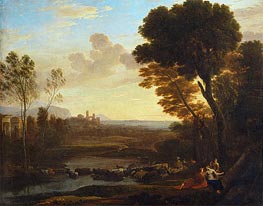
Landscape with Paris and Oenone (The Ford) 1648
Oil Painting
$3383
$3383
Canvas Print
$76.32
$76.32
SKU: LOC-15480
Claude Lorrain
Original Size: 118 x 150 cm
Louvre Museum, Paris, France
Claude Lorrain
Original Size: 118 x 150 cm
Louvre Museum, Paris, France
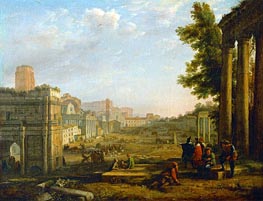
View of the Campo Vacino 1636
Oil Painting
$3313
$3313
Canvas Print
$74.19
$74.19
SKU: LOC-15481
Claude Lorrain
Original Size: 56 x 72 cm
Louvre Museum, Paris, France
Claude Lorrain
Original Size: 56 x 72 cm
Louvre Museum, Paris, France
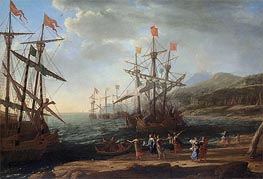
The Trojan Women Setting Fire to Their Fleet c.1643
Oil Painting
$5298
$5298
Canvas Print
$66.40
$66.40
SKU: LOC-15482
Claude Lorrain
Original Size: 105 x 152 cm
Metropolitan Museum of Art, New York, USA
Claude Lorrain
Original Size: 105 x 152 cm
Metropolitan Museum of Art, New York, USA
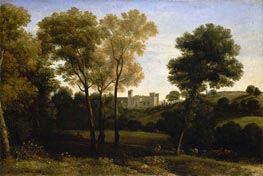
View of La Crescenza c.1648/50
Oil Painting
$2165
$2165
Canvas Print
$65.34
$65.34
SKU: LOC-15483
Claude Lorrain
Original Size: 38.7 x 58 cm
Metropolitan Museum of Art, New York, USA
Claude Lorrain
Original Size: 38.7 x 58 cm
Metropolitan Museum of Art, New York, USA
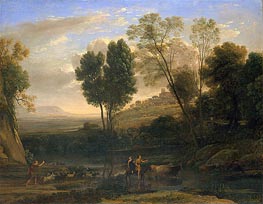
Sunrise c.1646/47
Oil Painting
$3639
$3639
Canvas Print
$75.26
$75.26
SKU: LOC-15484
Claude Lorrain
Original Size: 103 x 134 cm
Metropolitan Museum of Art, New York, USA
Claude Lorrain
Original Size: 103 x 134 cm
Metropolitan Museum of Art, New York, USA
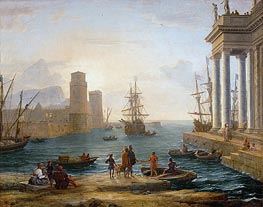
Seaport, Effects of Fog (Embarkation of Ulysses) 1646
Oil Painting
$4263
$4263
Canvas Print
$76.49
$76.49
SKU: LOC-15485
Claude Lorrain
Original Size: 119 x 150 cm
Louvre Museum, Paris, France
Claude Lorrain
Original Size: 119 x 150 cm
Louvre Museum, Paris, France
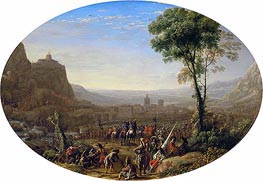
Louis XIII Takes the Pass at Suse in 1629 c.1631
Oil Painting
$3610
$3610
Canvas Print
$64.26
$64.26
SKU: LOC-15486
Claude Lorrain
Original Size: 28 x 41 cm
Louvre Museum, Paris, France
Claude Lorrain
Original Size: 28 x 41 cm
Louvre Museum, Paris, France
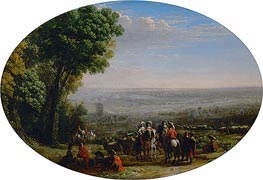
Siege of La Rochelle by Louis XIII, 1628 c.1631
Oil Painting
$3428
$3428
Canvas Print
$64.26
$64.26
SKU: LOC-15487
Claude Lorrain
Original Size: 28 x 42 cm
Louvre Museum, Paris, France
Claude Lorrain
Original Size: 28 x 42 cm
Louvre Museum, Paris, France
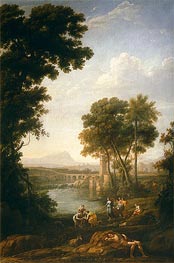
Moses Saved from the Waters of the Nile c.1639/40
Oil Painting
$3383
$3383
Canvas Print
$64.46
$64.46
SKU: LOC-15488
Claude Lorrain
Original Size: 209 x 138 cm
Prado Museum, Madrid, Spain
Claude Lorrain
Original Size: 209 x 138 cm
Prado Museum, Madrid, Spain
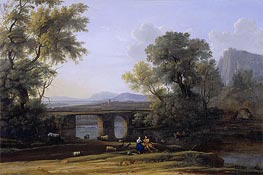
Pastoral Landscape n.d.
Oil Painting
$4244
$4244
Canvas Print
$64.63
$64.63
SKU: LOC-15489
Claude Lorrain
Original Size: 74 x 110 cm
Galleria Sabauda, Turin, Italy
Claude Lorrain
Original Size: 74 x 110 cm
Galleria Sabauda, Turin, Italy
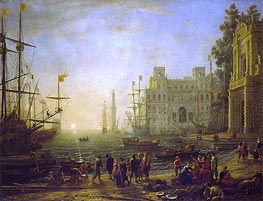
Port with Villa Medici 1637
Oil Painting
$5814
$5814
Canvas Print
$74.36
$74.36
SKU: LOC-15490
Claude Lorrain
Original Size: 102 x 133 cm
Galleria degli Uffizi, Florence, Italy
Claude Lorrain
Original Size: 102 x 133 cm
Galleria degli Uffizi, Florence, Italy
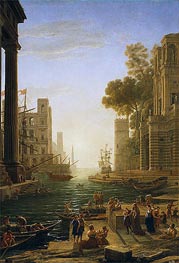
Landscape with the Embarkment of Saint Paula ... c.1639/40
Oil Painting
$5154
$5154
Canvas Print
$66.22
$66.22
SKU: LOC-15491
Claude Lorrain
Original Size: 211 x 145 cm
Prado Museum, Madrid, Spain
Claude Lorrain
Original Size: 211 x 145 cm
Prado Museum, Madrid, Spain
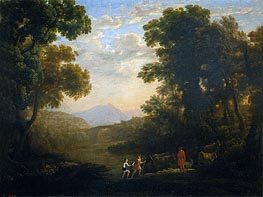
Fording a River c.1636
Oil Painting
$3066
$3066
Canvas Print
$72.95
$72.95
SKU: LOC-15492
Claude Lorrain
Original Size: 98 x 131 cm
Prado Museum, Madrid, Spain
Claude Lorrain
Original Size: 98 x 131 cm
Prado Museum, Madrid, Spain
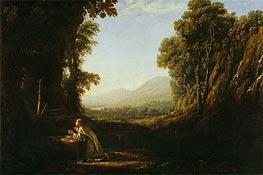
Landscape with Saint Mary of Cervello c.1636/38
Oil Painting
$3576
$3576
Canvas Print
$64.81
$64.81
SKU: LOC-15493
Claude Lorrain
Original Size: 162 x 241 cm
Prado Museum, Madrid, Spain
Claude Lorrain
Original Size: 162 x 241 cm
Prado Museum, Madrid, Spain
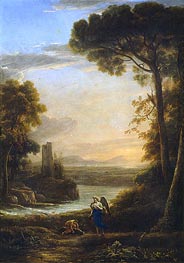
The Archangel Raphael and Tobias c.1639/40
Oil Painting
$3490
$3490
Canvas Print
$67.99
$67.99
SKU: LOC-15494
Claude Lorrain
Original Size: 211 x 145 cm
Prado Museum, Madrid, Spain
Claude Lorrain
Original Size: 211 x 145 cm
Prado Museum, Madrid, Spain
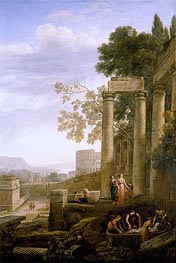
The Burial of Saint Seraphia c.1639/40
Oil Painting
$3751
$3751
Canvas Print
$65.17
$65.17
SKU: LOC-15495
Claude Lorrain
Original Size: 212 x 145 cm
Prado Museum, Madrid, Spain
Claude Lorrain
Original Size: 212 x 145 cm
Prado Museum, Madrid, Spain
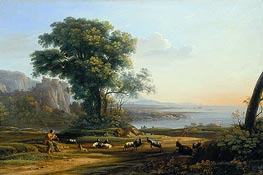
Pastoral Landscape (Sunset) c.1645/50
Oil Painting
$3072
$3072
Canvas Print
$64.63
$64.63
SKU: LOC-15496
Claude Lorrain
Original Size: 74 x 110 cm
Galleria Sabauda, Turin, Italy
Claude Lorrain
Original Size: 74 x 110 cm
Galleria Sabauda, Turin, Italy
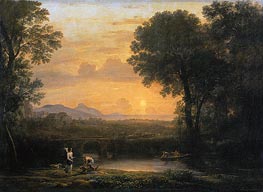
Landscape with Tobias and the Angel 1663
Oil Painting
$3550
$3550
Canvas Print
$71.01
$71.01
SKU: LOC-15497
Claude Lorrain
Original Size: 116 x 153.5 cm
State Hermitage Museum, St. Petersburg, Russia
Claude Lorrain
Original Size: 116 x 153.5 cm
State Hermitage Museum, St. Petersburg, Russia
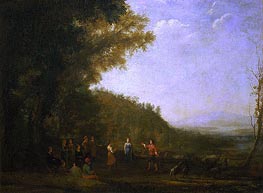
Rustic Dance 1637
Oil Painting
$3066
$3066
Canvas Print
$71.36
$71.36
SKU: LOC-15498
Claude Lorrain
Original Size: 72 x 97.5 cm
Galleria degli Uffizi, Florence, Italy
Claude Lorrain
Original Size: 72 x 97.5 cm
Galleria degli Uffizi, Florence, Italy