
John Frederick Lewis Painting Reproductions 1 of 2
1804-1876
English Romanticism Painter
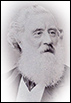
In a traditional Cairo mansion - all latticed screens, patterned stone, and a hush that makes you lower your voice - John Frederick Lewis found a subject he could inhabit rather than merely visit. Born in London on 14 July 1804 and dying there, in effect, on 15 August 1876 after a long retreat to Walton-on-Thames, he became England’s most exacting Orientalist observer: a painter who treated rooms, textiles, and architecture as seriously as faces, and who insisted on intimacy without intrusion.
Lewis’s beginnings were thoroughly metropolitan and practical. His father, Frederick Christian Lewis, worked as an engraver and landscape painter - a profession that rewarded precision and punished vagueness - and the household sat within a network of trades and images: his uncle Charles Lewis was a leading bookbinder; his brothers also made art, with Charles George Lewis later specialising in reproductive engraving, especially after Edwin Landseer. Landseer was more than a famous neighbour: he and Lewis were childhood friends, and the two trained together in the workshop of Sir Thomas Lawrence. The early Lewis moved in the orbit of animal painting, close to Landseer’s territory, and he did not abandon it so much as smuggle it into other worlds.
Look closely across his career and an animal is rarely incidental. In the mid 1820s he produced printed sets of big cats and then domesticated animals (both in 1826), and he painted large outdoor scenes with animals in Windsor Great Park - works that now sit in the Royal Collection (John Clark(e) with the animals at Sandpit Gate, c. 1825) and at Tate Britain. Those early subjects demanded a draughtsman’s nerve: fur, muscle, the tilt of a head that is never quite still. It is tempting to see, already, the discipline that would later render carved wood and inlaid furniture with the same attentive seriousness. Perhaps it was animals that taught him the ethics of looking - attention as respect, not possession.
Travel opened the palette and the tempo. In 1827 he toured Europe, the year he began to paint in watercolour, and the medium suited him: quick enough to catch a shifting street scene, exact enough for a pattern of shadow. Between 1832 and 1834 he went to Spain and Morocco, working with the energy of a man who knows he must store everything for later. Those Spanish years produced drawings that became published lithographs: Sketches and Drawings of the Alhambra, made during a Residence in Granada in the Years 1833–4 (1835), followed by Lewis’s Sketches of Spain and Spanish Character (1836). The nickname “Spanish Lewis” stuck for a while, useful for sorting him from his brother Frederick Christian - “Indian Lewis” - who went to India in 1834 and died young.
He was early on a route that would soon look inevitable: south, east, and then further still. English artists had already tested Spain, and others were roaming the Mediterranean and the Ottoman world - David Wilkie ahead of him in Spain, William James Müller in Cairo in 1838, David Roberts travelling broadly with a lithographer’s purpose - but Lewis’s commitment proved unusually sustained. In 1837 he left again, moving through Italy and Greece and reaching Constantinople in 1840. Then Egypt: from 1841 until 1851 he lived in Cairo in decidedly grand style, in an upper-class traditional house that later became a recurring stage-set for his art. This was not the hurried sketchbook tourism of many Orientalist careers; it was a decade of habit, observation, and accumulated drawings exact enough to keep paying dividends twenty years later.
Visitors caught the atmosphere and made it public. William Makepeace Thackeray, an old friend, called him a “languid Lotus-eater”, living a “dreamy, hazy, lazy, tobaccofied life”, dressed in local costume and equipped - memorably - with a “Damascus scimitar”. Lewis was often photographed in such dress later, as if the costume had become a second signature. In Alexandria in 1847 he married Marian Harper, and her presence matters to the moral temperature of the work: unlike many Orientalist painters, Lewis never painted a nude, and Marian modelled for several of his harem scenes. When he imagines the harem, it is not a theatre of exposed flesh but a world of interiors, manners, and fully clothed respectability - almost an English domesticity translated into Egyptian space.
Back in London, success arrived before he had properly returned. The Hareem, a watercolour shown in 1850, was a sensation, praised by John Ruskin and others - and it is, tellingly, the only major work certainly completed in Cairo itself. The next year, 1851, he came home for good, carrying not a portfolio of finished canvases but a hoard of precise drawings: architecture, furnishings, screens, costumes - the working vocabulary of an interior civilisation. From 1854 he lived in Walton-on-Thames, and the rest of his career became a kind of delayed processing of that Cairo decade, sometimes so direct that a late painting like The Reception (1873) could still be built from drawings of the house he had left more than twenty years earlier.
For much of the 1850s he continued in watercolour, then shifted toward oils - quicker to produce, better paid - without abandoning the meticulousness that made his reputation. “Generally in spite of all my hard work,” he wrote to a colleague, “I find water colour to be thoroly [sic] unremunerative… rolling the stone up the hill… such little pay!” That practical complaint does not cheapen the art; it clarifies the labour behind those apparently effortless surfaces. In the 1860s he often made two versions of a composition, an oil for the Royal Academy and a watercolour intended to bring the watercolour price nearer to the oil. Works such as An Armenian lady, Cairo - The love missive (1855) and The Coffee Bearer (1857) show how he could rework a figure, shift a glance, and let an earlier supporting character step forward into a new protagonist.
Technique carried its own quiet argument. Independently of the Pre-Raphaelites, Lewis developed a comparable method - colour applied with a minute touch on a white ground, creating a glowing, jewel-like effect. The result is realism of a particular kind: not the rough truth of a street fight, but the slow truth of surfaces honestly seen. His “loving” representation of Islamic architecture, furnishings, screens, and costume set a new standard, and it mattered beyond Britain: it influenced other painters, including the French Orientalist Jean-Léon Gérôme in later work. Yet Lewis’s realism is not merely documentary. In those upper-class Egyptian interiors, where Western influence seems to have been politely kept outside the door, the space itself carries the drama - a measured choreography of figures, textiles, and light that refuses easy sensationalism. Perhaps the long years in Cairo taught him that restraint can be its own theatre.
Institutions rewarded him, even as he remained personally elusive. He became President of the Society of Painters in Water Colours in 1855, resigned in 1858 when the Society’s rules prevented members from exhibiting oils, and was elected an Associate of the Royal Academy in 1859 and a full Royal Academician in 1865. He wrote little, even in letters; at a presidential dinner in 1855, required to address the watercolourists, he stood up, waited, and sat down again without speaking. By 1873 his health seemed to falter, and he never properly recovered before his death in 1876. For decades he slipped from view, then returned with force in the 1970s, when collectors drove his market into startling heights and the best works began to command prices in the millions. John Frederick Lewis RA remains, now, a test of our attention: he asks us to look longer than we meant to, and to recognise how a painted interior can hold a whole social world in balance.
Lewis’s beginnings were thoroughly metropolitan and practical. His father, Frederick Christian Lewis, worked as an engraver and landscape painter - a profession that rewarded precision and punished vagueness - and the household sat within a network of trades and images: his uncle Charles Lewis was a leading bookbinder; his brothers also made art, with Charles George Lewis later specialising in reproductive engraving, especially after Edwin Landseer. Landseer was more than a famous neighbour: he and Lewis were childhood friends, and the two trained together in the workshop of Sir Thomas Lawrence. The early Lewis moved in the orbit of animal painting, close to Landseer’s territory, and he did not abandon it so much as smuggle it into other worlds.
Look closely across his career and an animal is rarely incidental. In the mid 1820s he produced printed sets of big cats and then domesticated animals (both in 1826), and he painted large outdoor scenes with animals in Windsor Great Park - works that now sit in the Royal Collection (John Clark(e) with the animals at Sandpit Gate, c. 1825) and at Tate Britain. Those early subjects demanded a draughtsman’s nerve: fur, muscle, the tilt of a head that is never quite still. It is tempting to see, already, the discipline that would later render carved wood and inlaid furniture with the same attentive seriousness. Perhaps it was animals that taught him the ethics of looking - attention as respect, not possession.
Travel opened the palette and the tempo. In 1827 he toured Europe, the year he began to paint in watercolour, and the medium suited him: quick enough to catch a shifting street scene, exact enough for a pattern of shadow. Between 1832 and 1834 he went to Spain and Morocco, working with the energy of a man who knows he must store everything for later. Those Spanish years produced drawings that became published lithographs: Sketches and Drawings of the Alhambra, made during a Residence in Granada in the Years 1833–4 (1835), followed by Lewis’s Sketches of Spain and Spanish Character (1836). The nickname “Spanish Lewis” stuck for a while, useful for sorting him from his brother Frederick Christian - “Indian Lewis” - who went to India in 1834 and died young.
He was early on a route that would soon look inevitable: south, east, and then further still. English artists had already tested Spain, and others were roaming the Mediterranean and the Ottoman world - David Wilkie ahead of him in Spain, William James Müller in Cairo in 1838, David Roberts travelling broadly with a lithographer’s purpose - but Lewis’s commitment proved unusually sustained. In 1837 he left again, moving through Italy and Greece and reaching Constantinople in 1840. Then Egypt: from 1841 until 1851 he lived in Cairo in decidedly grand style, in an upper-class traditional house that later became a recurring stage-set for his art. This was not the hurried sketchbook tourism of many Orientalist careers; it was a decade of habit, observation, and accumulated drawings exact enough to keep paying dividends twenty years later.
Visitors caught the atmosphere and made it public. William Makepeace Thackeray, an old friend, called him a “languid Lotus-eater”, living a “dreamy, hazy, lazy, tobaccofied life”, dressed in local costume and equipped - memorably - with a “Damascus scimitar”. Lewis was often photographed in such dress later, as if the costume had become a second signature. In Alexandria in 1847 he married Marian Harper, and her presence matters to the moral temperature of the work: unlike many Orientalist painters, Lewis never painted a nude, and Marian modelled for several of his harem scenes. When he imagines the harem, it is not a theatre of exposed flesh but a world of interiors, manners, and fully clothed respectability - almost an English domesticity translated into Egyptian space.
Back in London, success arrived before he had properly returned. The Hareem, a watercolour shown in 1850, was a sensation, praised by John Ruskin and others - and it is, tellingly, the only major work certainly completed in Cairo itself. The next year, 1851, he came home for good, carrying not a portfolio of finished canvases but a hoard of precise drawings: architecture, furnishings, screens, costumes - the working vocabulary of an interior civilisation. From 1854 he lived in Walton-on-Thames, and the rest of his career became a kind of delayed processing of that Cairo decade, sometimes so direct that a late painting like The Reception (1873) could still be built from drawings of the house he had left more than twenty years earlier.
For much of the 1850s he continued in watercolour, then shifted toward oils - quicker to produce, better paid - without abandoning the meticulousness that made his reputation. “Generally in spite of all my hard work,” he wrote to a colleague, “I find water colour to be thoroly [sic] unremunerative… rolling the stone up the hill… such little pay!” That practical complaint does not cheapen the art; it clarifies the labour behind those apparently effortless surfaces. In the 1860s he often made two versions of a composition, an oil for the Royal Academy and a watercolour intended to bring the watercolour price nearer to the oil. Works such as An Armenian lady, Cairo - The love missive (1855) and The Coffee Bearer (1857) show how he could rework a figure, shift a glance, and let an earlier supporting character step forward into a new protagonist.
Technique carried its own quiet argument. Independently of the Pre-Raphaelites, Lewis developed a comparable method - colour applied with a minute touch on a white ground, creating a glowing, jewel-like effect. The result is realism of a particular kind: not the rough truth of a street fight, but the slow truth of surfaces honestly seen. His “loving” representation of Islamic architecture, furnishings, screens, and costume set a new standard, and it mattered beyond Britain: it influenced other painters, including the French Orientalist Jean-Léon Gérôme in later work. Yet Lewis’s realism is not merely documentary. In those upper-class Egyptian interiors, where Western influence seems to have been politely kept outside the door, the space itself carries the drama - a measured choreography of figures, textiles, and light that refuses easy sensationalism. Perhaps the long years in Cairo taught him that restraint can be its own theatre.
Institutions rewarded him, even as he remained personally elusive. He became President of the Society of Painters in Water Colours in 1855, resigned in 1858 when the Society’s rules prevented members from exhibiting oils, and was elected an Associate of the Royal Academy in 1859 and a full Royal Academician in 1865. He wrote little, even in letters; at a presidential dinner in 1855, required to address the watercolourists, he stood up, waited, and sat down again without speaking. By 1873 his health seemed to falter, and he never properly recovered before his death in 1876. For decades he slipped from view, then returned with force in the 1970s, when collectors drove his market into startling heights and the best works began to command prices in the millions. John Frederick Lewis RA remains, now, a test of our attention: he asks us to look longer than we meant to, and to recognise how a painted interior can hold a whole social world in balance.
42 John Frederick Lewis Paintings
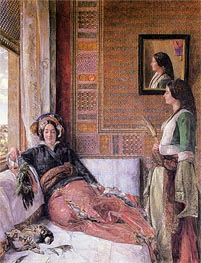
Hareem Life, Constantinople 1857
Oil Painting
$1755
$1755
Fine Art Paper Print
$59.19
$59.19
SKU: LJF-8496
John Frederick Lewis
Original Size: 45.7 x 30.5 cm
Laing Art Gallery, Newcastle-upon-Tyne, UK
John Frederick Lewis
Original Size: 45.7 x 30.5 cm
Laing Art Gallery, Newcastle-upon-Tyne, UK
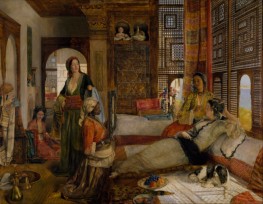
The Harem 1876
Oil Painting
$7404
$7404
Canvas Print
$73.72
$73.72
SKU: LJF-21471
John Frederick Lewis
Original Size: 91 x 114 cm
Museum and Art Gallery, Birmingham, UK
John Frederick Lewis
Original Size: 91 x 114 cm
Museum and Art Gallery, Birmingham, UK
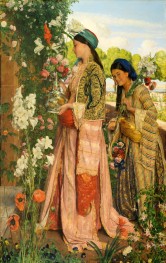
Lilium Auratum 1871
Oil Painting
$6999
$6999
Canvas Print
$62.51
$62.51
SKU: LJF-21472
John Frederick Lewis
Original Size: 127.2 x 87.7 cm
Museum and Art Gallery, Birmingham, UK
John Frederick Lewis
Original Size: 127.2 x 87.7 cm
Museum and Art Gallery, Birmingham, UK
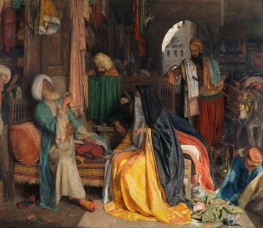
The Doubtful Coin 1869
Oil Painting
$6815
$6815
Canvas Print
$82.34
$82.34
SKU: LJF-21473
John Frederick Lewis
Original Size: 75 x 87.3 cm
Birmingham Museum of Art, Alabama, USA
John Frederick Lewis
Original Size: 75 x 87.3 cm
Birmingham Museum of Art, Alabama, USA
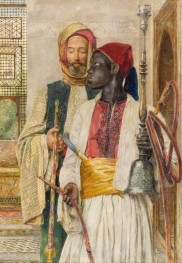
The Pipe Bearer 1856
Fine Art Paper Print
$59.19
$59.19
SKU: LJF-21474
John Frederick Lewis
Original Size: 43.2 x 30.5 cm
Museum and Art Gallery, Birmingham, UK
John Frederick Lewis
Original Size: 43.2 x 30.5 cm
Museum and Art Gallery, Birmingham, UK
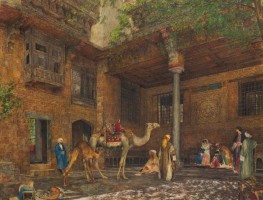
Courtyard of the Painter's House, Cairo 1850
Oil Painting
$7301
$7301
Canvas Print
$72.17
$72.17
SKU: LJF-21475
John Frederick Lewis
Original Size: 96.3 x 125.2 cm
Birmingham Museum of Art, Alabama, USA
John Frederick Lewis
Original Size: 96.3 x 125.2 cm
Birmingham Museum of Art, Alabama, USA
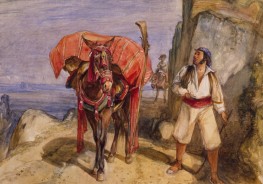
Mule and Mule Driver 1832
Fine Art Paper Print
$62.96
$62.96
SKU: LJF-21476
John Frederick Lewis
Original Size: 50.6 x 68.3 cm
Birmingham Museum of Art, Alabama, USA
John Frederick Lewis
Original Size: 50.6 x 68.3 cm
Birmingham Museum of Art, Alabama, USA
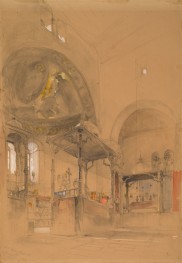
The Tomb and High Altar of the Convent of St Catherine 1842
Fine Art Paper Print
$62.31
$62.31
SKU: LJF-21477
John Frederick Lewis
Original Size: 68.4 x 50.7 cm
Birmingham Museum of Art, Alabama, USA
John Frederick Lewis
Original Size: 68.4 x 50.7 cm
Birmingham Museum of Art, Alabama, USA
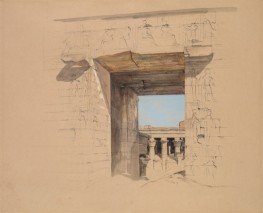
The Temple of Edfu: The Door of the Pylon 1850
Fine Art Paper Print
$59.19
$59.19
SKU: LJF-21478
John Frederick Lewis
Original Size: 35.5 x 43.3 cm
Cleveland Museum of Art, Ohio, USA
John Frederick Lewis
Original Size: 35.5 x 43.3 cm
Cleveland Museum of Art, Ohio, USA
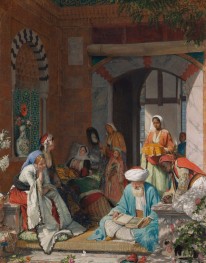
And the Prayer of Faith Shall Save the Sick 1872
Oil Painting
$6768
$6768
Canvas Print
$74.41
$74.41
SKU: LJF-21479
John Frederick Lewis
Original Size: 90.8 x 70.8 cm
Yale Center for British Art, Connecticut, USA
John Frederick Lewis
Original Size: 90.8 x 70.8 cm
Yale Center for British Art, Connecticut, USA
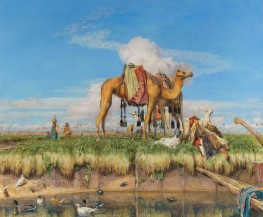
On the Banks of the Nile, Upper Egypt 1876
Oil Painting
$5995
$5995
Canvas Print
$78.54
$78.54
SKU: LJF-21480
John Frederick Lewis
Original Size: 62.2 x 74.3 cm
Yale Center for British Art, Connecticut, USA
John Frederick Lewis
Original Size: 62.2 x 74.3 cm
Yale Center for British Art, Connecticut, USA
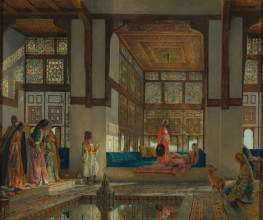
A Lady Receiving Visitors (The Reception) 1873
Oil Painting
$7395
$7395
Canvas Print
$79.40
$79.40
SKU: LJF-21481
John Frederick Lewis
Original Size: 63.5 x 76.2 cm
Yale Center for British Art, Connecticut, USA
John Frederick Lewis
Original Size: 63.5 x 76.2 cm
Yale Center for British Art, Connecticut, USA
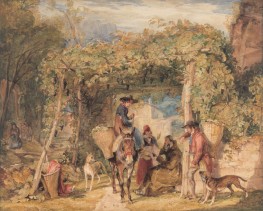
Figures and Animals in a Vineyard c.1829
Fine Art Paper Print
$64.77
$64.77
SKU: LJF-21482
John Frederick Lewis
Original Size: 42 x 52 cm
Yale Center for British Art, Connecticut, USA
John Frederick Lewis
Original Size: 42 x 52 cm
Yale Center for British Art, Connecticut, USA
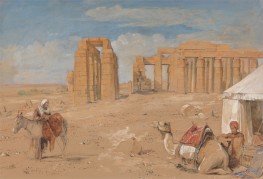
The Ramesseum at Thebes 1841-1851
Fine Art Paper Print
$59.19
$59.19
SKU: LJF-21483
John Frederick Lewis
Original Size: 35 x 51 cm
Yale Center for British Art, Connecticut, USA
John Frederick Lewis
Original Size: 35 x 51 cm
Yale Center for British Art, Connecticut, USA
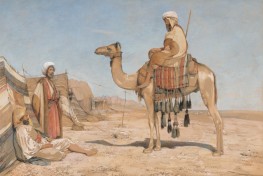
A Bedouin Encampment 1841-1851
Fine Art Paper Print
$59.19
$59.19
SKU: LJF-21484
John Frederick Lewis
Original Size: 35 x 51.8 cm
Yale Center for British Art, Connecticut, USA
John Frederick Lewis
Original Size: 35 x 51.8 cm
Yale Center for British Art, Connecticut, USA
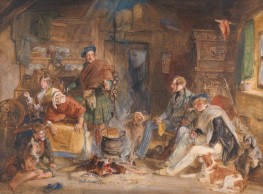
Highland Hospitality 1832
Fine Art Paper Print
$66.23
$66.23
SKU: LJF-21485
John Frederick Lewis
Original Size: 56.2 x 76 cm
Yale Center for British Art, Connecticut, USA
John Frederick Lewis
Original Size: 56.2 x 76 cm
Yale Center for British Art, Connecticut, USA
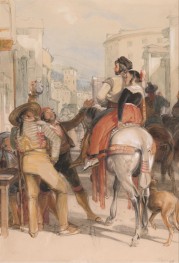
A Street Scene in Granada on the Day of the Bullfight 1833
Fine Art Paper Print
$59.19
$59.19
SKU: LJF-21486
John Frederick Lewis
Original Size: 43.2 x 29 cm
Yale Center for British Art, Connecticut, USA
John Frederick Lewis
Original Size: 43.2 x 29 cm
Yale Center for British Art, Connecticut, USA
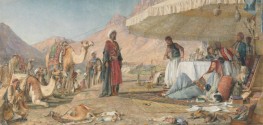
A Frank Encampment in the Desert of Mount Sinai. 1842 1856
Fine Art Paper Print
$59.19
$59.19
SKU: LJF-21487
John Frederick Lewis
Original Size: 66.7 x 136 cm
Yale Center for British Art, Connecticut, USA
John Frederick Lewis
Original Size: 66.7 x 136 cm
Yale Center for British Art, Connecticut, USA
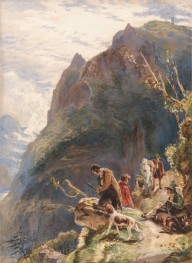
Tyrolese Hunters 1827-1828
Fine Art Paper Print
$59.19
$59.19
SKU: LJF-21488
John Frederick Lewis
Original Size: 27.9 x 20.6 cm
Yale Center for British Art, Connecticut, USA
John Frederick Lewis
Original Size: 27.9 x 20.6 cm
Yale Center for British Art, Connecticut, USA
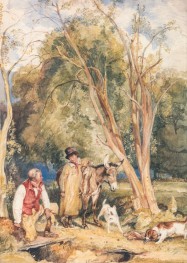
Game Keeper and Boy Ferreting a Rabbit c.1828
Fine Art Paper Print
$59.19
$59.19
SKU: LJF-21489
John Frederick Lewis
Original Size: 26.7 x 19.3 cm
Yale Center for British Art, Connecticut, USA
John Frederick Lewis
Original Size: 26.7 x 19.3 cm
Yale Center for British Art, Connecticut, USA
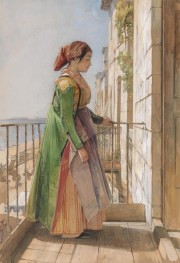
A Greek Girl Standing on a Balcony 1840
Fine Art Paper Print
$59.19
$59.19
SKU: LJF-21490
John Frederick Lewis
Original Size: 42.5 x 29 cm
Yale Center for British Art, Connecticut, USA
John Frederick Lewis
Original Size: 42.5 x 29 cm
Yale Center for British Art, Connecticut, USA
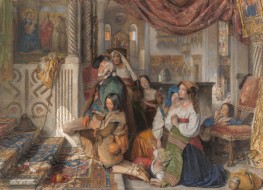
Roman Pilgrims 1854
Fine Art Paper Print
$64.92
$64.92
SKU: LJF-21491
John Frederick Lewis
Original Size: 55.6 x 76.5 cm
Yale Center for British Art, Connecticut, USA
John Frederick Lewis
Original Size: 55.6 x 76.5 cm
Yale Center for British Art, Connecticut, USA
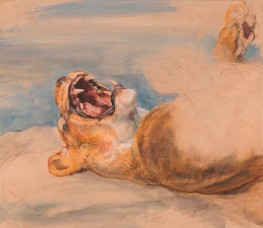
Study of a Lioness c.1824
Fine Art Paper Print
$59.19
$59.19
SKU: LJF-21492
John Frederick Lewis
Original Size: 36 x 42 cm
Yale Center for British Art, Connecticut, USA
John Frederick Lewis
Original Size: 36 x 42 cm
Yale Center for British Art, Connecticut, USA
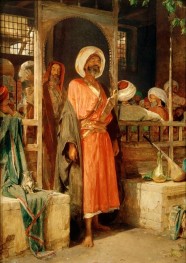
At the Door of a Café in Cairo 1865
Oil Painting
$5730
$5730
Canvas Print
$67.35
$67.35
SKU: LJF-21493
John Frederick Lewis
Original Size: 76.2 x 53.4 cm
Royal Academy of Arts, London, UK
John Frederick Lewis
Original Size: 76.2 x 53.4 cm
Royal Academy of Arts, London, UK