
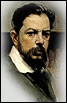
Joaquin Sorolla y Bastida Painting Reproductions 1 of 6
1863-1923
Spanish Impressionist Painter
Light hits the sand like a physical force in Joaquín Sorolla y Bastida’s paintings - not as a metaphor, but as something that presses against skin, water, linen, and paint. Joaquín Sorolla y Bastida (27 February 1863 - 10 August 1923) was a Spanish painter who moved with unusual ease between portraiture, landscape, and large public canvases of social and historical ambition. In the broad arc of modern Spanish painting, he became a leading figure of his era, repeatedly returning to the problem that never stops yielding answers: how to make sunlight believable without making it sentimental.
Valencia shaped his earliest circumstances with cruel speed. He was born there in 1863, the eldest child of a tradesman also named Joaquín Sorolla and his wife, Concepción Bastida; a sister, Concha, followed a year later. In August 1865, both parents died, possibly of cholera, leaving the children to be raised by their maternal aunt and uncle, a locksmith. That early rupture matters, not as a psychological trope, but as a practical fact: apprenticeship, discipline, and persistence became necessities before they could be virtues.
At nine he began formal art education in his home city, studying under teachers that included Cayetano Capuz and Salustiano Asenjo. Madrid came next, taken at eighteen with the hungry purpose of someone who knows museums can function as schools. In the Museo del Prado he studied master paintings intensely, measuring himself against the long Spanish tradition he would later echo and challenge. Military service interrupted the momentum, yet at twenty-two he secured a grant for four years of study in Rome. There, under the stabilising presence of Francisco Pradilla, director of the Spanish Academy in Rome, he found a professional model - what it looked like to live as a painter without living as a romantic myth. Back in the Roman orbit he worked alongside figures such as José Benlliure, Emilio Sala, and José Villegas Cordero, and a long sojourn to Paris in 1885 opened him to modern painting through exhibitions of Jules Bastien-Lepage and Adolph von Menzel. Not a conversion, exactly; more a widening of the lens.
Love and labour braided together when Sorolla returned to Valencia in 1888 to marry Clotilde García del Castillo, whom he had first met in 1879 while working in her father’s studio. Their children arrived in quick succession: Maria (1890), Joaquín (1892), Elena (1895). In 1890 the family moved to Madrid, and the following decade was marked by ambition on a public scale. Large canvases - orientalist, mythological, historical, and social subjects - were made for salons and international exhibitions in Madrid, Paris, Venice, Munich, Berlin, and Chicago. These were not beach scenes made for pleasure. They were bids for position, arguments in paint addressed to juries, critics, and institutions.
Recognition came early and decisively. Another Marguerite (1892) won a gold medal at the National Exhibition in Madrid, then first prize at the Chicago International Exhibition; it was acquired and later donated to the Washington University in St. Louis Museum in St. Louis, Missouri. Two years later, The Return from Fishing: Hauling the Boat (1894) was admired at the Paris Salon and acquired by the state for the Musée du Luxembourg - a sign that his handling of working life, sea light, and physical effort could read as both modern and official. By the mid-1890s Sorolla had become, in public terms, the acknowledged head of the modern Spanish school. Yet the label sits awkwardly beside the work, which keeps slipping between categories: naturalism without heaviness, spectacle without theatrical falseness, and bravura that still attends to what is actually seen.
In 1897 he produced two paintings that deliberately joined art and science: Portrait of Dr. Simarro at the microscope and A Research. Here the drama is not moralised poverty or heroic history, but the laboratory itself - the indoor world remade by artificial light. The portrait of Simarro stages a conversation between sources: a reddish-yellow gas burner and the weak mauvish afternoon light entering through a window. Sorolla won the Prize of Honor at the National Exhibition of Fine Arts in Madrid that year, and the achievement is more than anecdotal. It shows how seriously he took atmosphere, even when the sun was absent; his realism could function under gaslight as well as on sand.
Then came the painting that altered the trajectory. Sad Inheritance! (1899) - a vast, highly finished canvas - depicts crippled children bathing at the sea in Valencia under the supervision of a monk. The title implies congenital syphilis, and later interpretation has also pointed to the presence of a polio epidemic in the region through the image of two affected children. The work earned Sorolla the Grand Prix and a medal of honor at the Universal Exhibition in Paris in 1900, followed by another medal of honor at the National Exhibition in Madrid in 1901. Preparatory oil sketches for the painting were handled with extraordinary luminosity and assurance; he even gave two as gifts to American artists, one to John Singer Sargent and another to William Merritt Chase. Yet after Sad Inheritance! he did not return to such overt social consciousness. Perhaps the sheer weight of the subject - and the expectations it generated - made him wary. Or perhaps he recognised that his truest intensity was not in indictment, but in observation.
Honours accumulated with the new century: a medal at the Paris Universal Exposition of 1900 and nomination as Knight of the Legion of Honour, followed by memberships and distinctions in Paris, Lisbon, and Valencia, including the Real Academia de Bellas Artes de San Carlos in his home city. A special exhibition at the Galeries Georges Petit in Paris in 1906 - nearly 500 works spanning early paintings and recent sunlit scenes - proved a critical and financial triumph and brought his appointment as Officer of the Legion of Honour. Germany and London received him more cautiously, yet in England in 1908 he met Archer Milton Huntington, who linked Sorolla to the Hispanic Society of America and invited him to show in New York in 1909. That exhibition comprised 356 paintings, 195 sold; he stayed five months in America and painted more than twenty portraits, turning travel into production without making the results feel manufactured.
Portraiture paid well, even when it constrained him. Sorolla did not prefer the formality of commissions, which could curb his appetite for invention and expose his indifference to certain sitters. Still, the portrayal of his family drew him irresistibly, and outdoors he found the setting that loosened convention. In María at La Granja (1907), his daughter stands in sun-dappled landscape; Spanish royalty appears with similar clarity in Portrait of King Alfonso XIII in a Hussar’s Uniform (1907). Velázquez rises to the surface in My Family (1901), a conscious nod to Las Meninas in which wife and children are grouped close while the painter appears reflected at a distance. Competition, too, flickers in the brush - the wish to measure himself against his friend John Singer Sargent can be sensed in Portrait of Mrs. Ira Nelson Morris and her children (1911). Commissions in the United States included Portrait of Mr. Taft, President of the United States, painted at the White House and now on permanent display at the Taft Museum of Art in Cincinnati. Even Louis Comfort Tiffany is placed not in an austere studio but in his Long Island garden, seated at his easel amid extravagant flowers, as if surroundings must collaborate with identity.
In these years the beach scenes, gardens, and shimmering water do not function as escape from seriousness; they are serious in another key. My Wife and Daughters in the Garden (1910) lets traditional portraiture yield to painting as sensation - thick passages of colour, fluid handling, and a compositional freedom that still holds the figures with care. It is easy to underestimate how constructed this apparent spontaneity is. Nothing here is accidental, least of all the balance between flicker and solidity.
The most consuming task arrived in 1911. After a second American visit that included exhibitions of new work at the Saint Louis Art Museum and the Art Institute of Chicago, Sorolla met Huntington in Paris and signed a contract to paint a cycle on life in Spain. Fourteen murals, 12 to 14 feet high and altogether 227 feet long, would be installed in the Hispanic Society of America building in Manhattan. Huntington had wanted a history of Spain; Sorolla insisted on something less didactic, eventually calling it Vision of Spain and, more specifically, The Provinces of Spain. He painted all but one en plein air, travelling to paint on site in Navarre, Aragon, Catalonia, Valencia, Elche, Seville, Andalusia, Extremadura, Galicia, Guipuzcoa, Castile, Leon, and Ayamonte. Models posed in local costume; throngs of labourers and residents form panoramas that celebrate regional culture without reducing it to folklore. By 1917 he admitted exhaustion. He completed the final panel by July 1919, leaving a monument built not from stone but from light, colour, and observation carried to architectural scale.
A stroke in 1920, suffered while painting a portrait in his garden in Madrid, ended work abruptly. Paralysed for more than four years, Sorolla died on 10 August 1923 and was buried in the Cementeri de Valencia. The Sorolla Room at the Hispanic Society opened to the public in 1926; it later closed for remodelling in 2008, the murals toured museums in Spain for the first time, and the room reopened in 2010 with the cycle on permanent display. After his death, Clotilde García del Castillo left many paintings to the Spanish public; they formed the collection that became the Museo Sorolla, housed in the artist’s former Madrid home and opened in 1932. Works entered museums across Spain, Europe, and America, as well as private collections. In 1933, J. Paul Getty purchased ten Impressionist beach scenes by Sorolla, several now at the J. Paul Getty Museum. A short documentary, Sorolla, el pintor de la luz, was presented in 1960 at Cannes, the Spanish National Dance Company later produced a ballet based on The Provinces of Spain, and Valencia’s high-speed railway station bears his name. A museum devoted to his work is scheduled to open in Valencia’s Palau de les Comunicacions in 2026.
He made Spain’s glare legible. He also made its quieter lights - laboratory gas, afternoon mauve, shaded gardens - part of the same inquiry. Joaquín Sorolla y Bastida remains compelling because the work never settles for a single answer to what sunlight does. Perhaps solitude gave his brush its clarity. What lasts, in any case, is the sensation of looking: brightness rendered without flattery, and life held steady in the instant it passes.
Valencia shaped his earliest circumstances with cruel speed. He was born there in 1863, the eldest child of a tradesman also named Joaquín Sorolla and his wife, Concepción Bastida; a sister, Concha, followed a year later. In August 1865, both parents died, possibly of cholera, leaving the children to be raised by their maternal aunt and uncle, a locksmith. That early rupture matters, not as a psychological trope, but as a practical fact: apprenticeship, discipline, and persistence became necessities before they could be virtues.
At nine he began formal art education in his home city, studying under teachers that included Cayetano Capuz and Salustiano Asenjo. Madrid came next, taken at eighteen with the hungry purpose of someone who knows museums can function as schools. In the Museo del Prado he studied master paintings intensely, measuring himself against the long Spanish tradition he would later echo and challenge. Military service interrupted the momentum, yet at twenty-two he secured a grant for four years of study in Rome. There, under the stabilising presence of Francisco Pradilla, director of the Spanish Academy in Rome, he found a professional model - what it looked like to live as a painter without living as a romantic myth. Back in the Roman orbit he worked alongside figures such as José Benlliure, Emilio Sala, and José Villegas Cordero, and a long sojourn to Paris in 1885 opened him to modern painting through exhibitions of Jules Bastien-Lepage and Adolph von Menzel. Not a conversion, exactly; more a widening of the lens.
Love and labour braided together when Sorolla returned to Valencia in 1888 to marry Clotilde García del Castillo, whom he had first met in 1879 while working in her father’s studio. Their children arrived in quick succession: Maria (1890), Joaquín (1892), Elena (1895). In 1890 the family moved to Madrid, and the following decade was marked by ambition on a public scale. Large canvases - orientalist, mythological, historical, and social subjects - were made for salons and international exhibitions in Madrid, Paris, Venice, Munich, Berlin, and Chicago. These were not beach scenes made for pleasure. They were bids for position, arguments in paint addressed to juries, critics, and institutions.
Recognition came early and decisively. Another Marguerite (1892) won a gold medal at the National Exhibition in Madrid, then first prize at the Chicago International Exhibition; it was acquired and later donated to the Washington University in St. Louis Museum in St. Louis, Missouri. Two years later, The Return from Fishing: Hauling the Boat (1894) was admired at the Paris Salon and acquired by the state for the Musée du Luxembourg - a sign that his handling of working life, sea light, and physical effort could read as both modern and official. By the mid-1890s Sorolla had become, in public terms, the acknowledged head of the modern Spanish school. Yet the label sits awkwardly beside the work, which keeps slipping between categories: naturalism without heaviness, spectacle without theatrical falseness, and bravura that still attends to what is actually seen.
In 1897 he produced two paintings that deliberately joined art and science: Portrait of Dr. Simarro at the microscope and A Research. Here the drama is not moralised poverty or heroic history, but the laboratory itself - the indoor world remade by artificial light. The portrait of Simarro stages a conversation between sources: a reddish-yellow gas burner and the weak mauvish afternoon light entering through a window. Sorolla won the Prize of Honor at the National Exhibition of Fine Arts in Madrid that year, and the achievement is more than anecdotal. It shows how seriously he took atmosphere, even when the sun was absent; his realism could function under gaslight as well as on sand.
Then came the painting that altered the trajectory. Sad Inheritance! (1899) - a vast, highly finished canvas - depicts crippled children bathing at the sea in Valencia under the supervision of a monk. The title implies congenital syphilis, and later interpretation has also pointed to the presence of a polio epidemic in the region through the image of two affected children. The work earned Sorolla the Grand Prix and a medal of honor at the Universal Exhibition in Paris in 1900, followed by another medal of honor at the National Exhibition in Madrid in 1901. Preparatory oil sketches for the painting were handled with extraordinary luminosity and assurance; he even gave two as gifts to American artists, one to John Singer Sargent and another to William Merritt Chase. Yet after Sad Inheritance! he did not return to such overt social consciousness. Perhaps the sheer weight of the subject - and the expectations it generated - made him wary. Or perhaps he recognised that his truest intensity was not in indictment, but in observation.
Honours accumulated with the new century: a medal at the Paris Universal Exposition of 1900 and nomination as Knight of the Legion of Honour, followed by memberships and distinctions in Paris, Lisbon, and Valencia, including the Real Academia de Bellas Artes de San Carlos in his home city. A special exhibition at the Galeries Georges Petit in Paris in 1906 - nearly 500 works spanning early paintings and recent sunlit scenes - proved a critical and financial triumph and brought his appointment as Officer of the Legion of Honour. Germany and London received him more cautiously, yet in England in 1908 he met Archer Milton Huntington, who linked Sorolla to the Hispanic Society of America and invited him to show in New York in 1909. That exhibition comprised 356 paintings, 195 sold; he stayed five months in America and painted more than twenty portraits, turning travel into production without making the results feel manufactured.
Portraiture paid well, even when it constrained him. Sorolla did not prefer the formality of commissions, which could curb his appetite for invention and expose his indifference to certain sitters. Still, the portrayal of his family drew him irresistibly, and outdoors he found the setting that loosened convention. In María at La Granja (1907), his daughter stands in sun-dappled landscape; Spanish royalty appears with similar clarity in Portrait of King Alfonso XIII in a Hussar’s Uniform (1907). Velázquez rises to the surface in My Family (1901), a conscious nod to Las Meninas in which wife and children are grouped close while the painter appears reflected at a distance. Competition, too, flickers in the brush - the wish to measure himself against his friend John Singer Sargent can be sensed in Portrait of Mrs. Ira Nelson Morris and her children (1911). Commissions in the United States included Portrait of Mr. Taft, President of the United States, painted at the White House and now on permanent display at the Taft Museum of Art in Cincinnati. Even Louis Comfort Tiffany is placed not in an austere studio but in his Long Island garden, seated at his easel amid extravagant flowers, as if surroundings must collaborate with identity.
In these years the beach scenes, gardens, and shimmering water do not function as escape from seriousness; they are serious in another key. My Wife and Daughters in the Garden (1910) lets traditional portraiture yield to painting as sensation - thick passages of colour, fluid handling, and a compositional freedom that still holds the figures with care. It is easy to underestimate how constructed this apparent spontaneity is. Nothing here is accidental, least of all the balance between flicker and solidity.
The most consuming task arrived in 1911. After a second American visit that included exhibitions of new work at the Saint Louis Art Museum and the Art Institute of Chicago, Sorolla met Huntington in Paris and signed a contract to paint a cycle on life in Spain. Fourteen murals, 12 to 14 feet high and altogether 227 feet long, would be installed in the Hispanic Society of America building in Manhattan. Huntington had wanted a history of Spain; Sorolla insisted on something less didactic, eventually calling it Vision of Spain and, more specifically, The Provinces of Spain. He painted all but one en plein air, travelling to paint on site in Navarre, Aragon, Catalonia, Valencia, Elche, Seville, Andalusia, Extremadura, Galicia, Guipuzcoa, Castile, Leon, and Ayamonte. Models posed in local costume; throngs of labourers and residents form panoramas that celebrate regional culture without reducing it to folklore. By 1917 he admitted exhaustion. He completed the final panel by July 1919, leaving a monument built not from stone but from light, colour, and observation carried to architectural scale.
A stroke in 1920, suffered while painting a portrait in his garden in Madrid, ended work abruptly. Paralysed for more than four years, Sorolla died on 10 August 1923 and was buried in the Cementeri de Valencia. The Sorolla Room at the Hispanic Society opened to the public in 1926; it later closed for remodelling in 2008, the murals toured museums in Spain for the first time, and the room reopened in 2010 with the cycle on permanent display. After his death, Clotilde García del Castillo left many paintings to the Spanish public; they formed the collection that became the Museo Sorolla, housed in the artist’s former Madrid home and opened in 1932. Works entered museums across Spain, Europe, and America, as well as private collections. In 1933, J. Paul Getty purchased ten Impressionist beach scenes by Sorolla, several now at the J. Paul Getty Museum. A short documentary, Sorolla, el pintor de la luz, was presented in 1960 at Cannes, the Spanish National Dance Company later produced a ballet based on The Provinces of Spain, and Valencia’s high-speed railway station bears his name. A museum devoted to his work is scheduled to open in Valencia’s Palau de les Comunicacions in 2026.
He made Spain’s glare legible. He also made its quieter lights - laboratory gas, afternoon mauve, shaded gardens - part of the same inquiry. Joaquín Sorolla y Bastida remains compelling because the work never settles for a single answer to what sunlight does. Perhaps solitude gave his brush its clarity. What lasts, in any case, is the sensation of looking: brightness rendered without flattery, and life held steady in the instant it passes.
131 Joaquín Sorolla Paintings
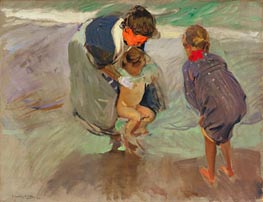
On the Beach 1908
Oil Painting
$1128
$1128
Canvas Print
$74.98
$74.98
SKU: JSB-5360
Joaquin Sorolla y Bastida
Original Size: 82.6 x 105.4 cm
Fine Arts Museums of San Francisco, California, USA
Joaquin Sorolla y Bastida
Original Size: 82.6 x 105.4 cm
Fine Arts Museums of San Francisco, California, USA
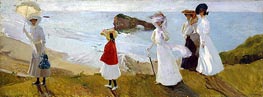
Lighthouse Walk at Biarritz 1906
Oil Painting
$960
$960
Canvas Print
$64.63
$64.63
SKU: JSB-5361
Joaquin Sorolla y Bastida
Original Size: 68.3 x 188.6 cm
Boston Museum of Fine Arts, Massachusetts, USA
Joaquin Sorolla y Bastida
Original Size: 68.3 x 188.6 cm
Boston Museum of Fine Arts, Massachusetts, USA
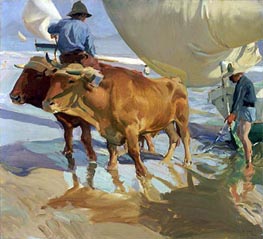
Oxen on the Beach 1910
Oil Painting
$1159
$1159
SKU: JSB-5362
Joaquin Sorolla y Bastida
Original Size: 73.7 x 109.2 cm
Memorial Art Gallery at the University of Rochester, New York, USA
Joaquin Sorolla y Bastida
Original Size: 73.7 x 109.2 cm
Memorial Art Gallery at the University of Rochester, New York, USA
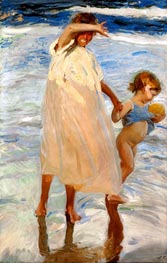
Two Sisters, Valencia 1909
Oil Painting
$1451
$1451
Canvas Print
$64.63
$64.63
SKU: JSB-5363
Joaquin Sorolla y Bastida
Original Size: unknown
Art Institute of Chicago, Illinois, USA
Joaquin Sorolla y Bastida
Original Size: unknown
Art Institute of Chicago, Illinois, USA
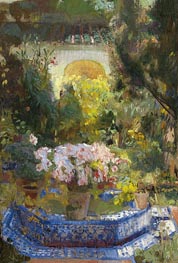
The Courtyard of the Sorolla House 1917
Oil Painting
$960
$960
Canvas Print
$66.43
$66.43
SKU: JSB-5364
Joaquin Sorolla y Bastida
Original Size: 96 x 64.8 cm
Museo Carmen Thyssen, Málaga, Spain
Joaquin Sorolla y Bastida
Original Size: 96 x 64.8 cm
Museo Carmen Thyssen, Málaga, Spain
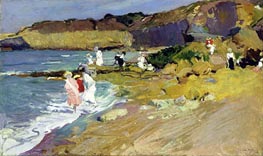
Beach Scene 1906
Oil Painting
$1089
$1089
Canvas Print
$64.63
$64.63
SKU: JSB-5365
Joaquin Sorolla y Bastida
Original Size: 61.5 x 103.2 cm
Art Institute of Chicago, Illinois, USA
Joaquin Sorolla y Bastida
Original Size: 61.5 x 103.2 cm
Art Institute of Chicago, Illinois, USA
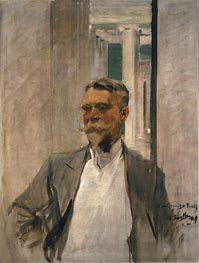
Portrait of Charles Kurtz 1909
Oil Painting
$1002
$1002
Canvas Print
$73.19
$73.19
SKU: JSB-5366
Joaquin Sorolla y Bastida
Original Size: 101.6 x 76.2 cm
Albright-Knox Art Gallery, Buffalo, USA
Joaquin Sorolla y Bastida
Original Size: 101.6 x 76.2 cm
Albright-Knox Art Gallery, Buffalo, USA
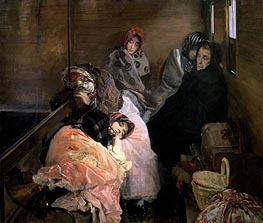
The White Slave Trade 1895
Oil Painting
$1325
$1325
Canvas Print
$83.71
$83.71
SKU: JSB-5367
Joaquin Sorolla y Bastida
Original Size: 166.5 x 194 cm
Museo Sorolla, Madrid, Spain
Joaquin Sorolla y Bastida
Original Size: 166.5 x 194 cm
Museo Sorolla, Madrid, Spain
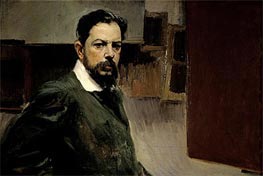
Self Portrait 1904
Oil Painting
$991
$991
Canvas Print
$64.63
$64.63
SKU: JSB-5368
Joaquin Sorolla y Bastida
Original Size: 66 x 100.6 cm
Museo Sorolla, Madrid, Spain
Joaquin Sorolla y Bastida
Original Size: 66 x 100.6 cm
Museo Sorolla, Madrid, Spain
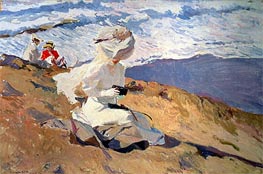
The Beach at Biarritz 1906
Oil Painting
$1031
$1031
Canvas Print
$64.64
$64.64
SKU: JSB-5369
Joaquin Sorolla y Bastida
Original Size: 62 x 93.5 cm
Museo Sorolla, Madrid, Spain
Joaquin Sorolla y Bastida
Original Size: 62 x 93.5 cm
Museo Sorolla, Madrid, Spain
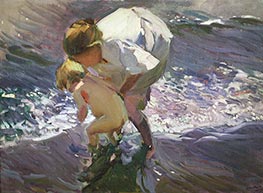
Bathing on the Beach 1908
Oil Painting
$1089
$1089
Canvas Print
$70.17
$70.17
SKU: JSB-5370
Joaquin Sorolla y Bastida
Original Size: 77 x 105 cm
Real Academia de Bellas Artes de San Fernando, Madrid, Spain
Joaquin Sorolla y Bastida
Original Size: 77 x 105 cm
Real Academia de Bellas Artes de San Fernando, Madrid, Spain
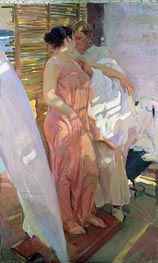
After the Bath (The Pink Robe) 1916
Oil Painting
$1103
$1103
Canvas Print
$64.63
$64.63
SKU: JSB-5371
Joaquin Sorolla y Bastida
Original Size: 208 x 126.5 cm
Museo Sorolla, Madrid, Spain
Joaquin Sorolla y Bastida
Original Size: 208 x 126.5 cm
Museo Sorolla, Madrid, Spain
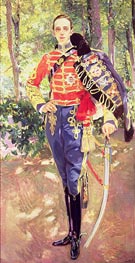
Portrait of King Alfonso XIII wearing the uniform ... 1907
Oil Painting
$1201
$1201
Canvas Print
$64.63
$64.63
SKU: JSB-5372
Joaquin Sorolla y Bastida
Original Size: 208 x 108.5 cm
Private Collection
Joaquin Sorolla y Bastida
Original Size: 208 x 108.5 cm
Private Collection
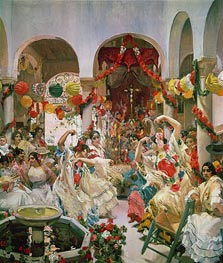
Seville. The Dance 1915
Oil Painting
$4516
$4516
Canvas Print
$64.63
$64.63
SKU: JSB-5373
Joaquin Sorolla y Bastida
Original Size: 351 x 302.5 cm
Private Collection
Joaquin Sorolla y Bastida
Original Size: 351 x 302.5 cm
Private Collection
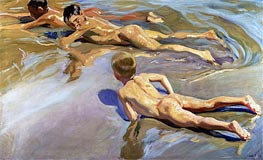
Children on the Beach 1910
Oil Painting
$1002
$1002
Canvas Print
$64.63
$64.63
SKU: JSB-5374
Joaquin Sorolla y Bastida
Original Size: 118 x 185 cm
Prado Museum, Madrid, Spain
Joaquin Sorolla y Bastida
Original Size: 118 x 185 cm
Prado Museum, Madrid, Spain
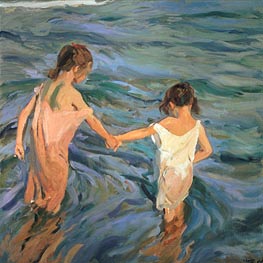
Girls in the Sea 1909
Oil Painting
$1415
$1415
Canvas Print
$97.77
$97.77
SKU: JSB-5375
Joaquin Sorolla y Bastida
Original Size: 150 x 150 cm
Museo Sorolla, Madrid, Spain
Joaquin Sorolla y Bastida
Original Size: 150 x 150 cm
Museo Sorolla, Madrid, Spain
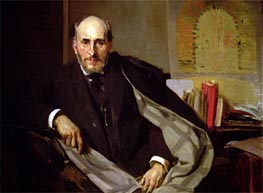
Portrait of Santiago Ramon y Cajal 1906
Oil Painting
$1073
$1073
Canvas Print
$69.63
$69.63
SKU: JSB-5376
Joaquin Sorolla y Bastida
Original Size: 91 x 127 cm
Private Collection
Joaquin Sorolla y Bastida
Original Size: 91 x 127 cm
Private Collection
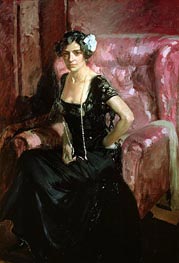
Clotilde in an Evening Dress 1910
Oil Painting
$1255
$1255
Canvas Print
$68.03
$68.03
SKU: JSB-5377
Joaquin Sorolla y Bastida
Original Size: 150 x 105 cm
Museo Sorolla, Madrid, Spain
Joaquin Sorolla y Bastida
Original Size: 150 x 105 cm
Museo Sorolla, Madrid, Spain
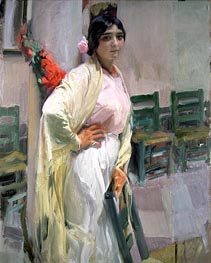
Maria, the Pretty One 1914
Oil Painting
$1159
$1159
Canvas Print
$78.36
$78.36
SKU: JSB-5378
Joaquin Sorolla y Bastida
Original Size: 123 x 98 cm
Museo Sorolla, Madrid, Spain
Joaquin Sorolla y Bastida
Original Size: 123 x 98 cm
Museo Sorolla, Madrid, Spain
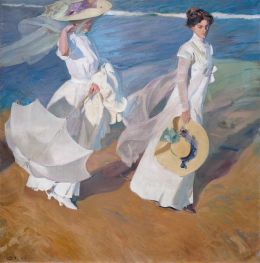
Strolling along the Seashore 1909
Oil Painting
$1201
$1201
Canvas Print
$96.71
$96.71
SKU: JSB-5379
Joaquin Sorolla y Bastida
Original Size: 205 x 200 cm
Museo Sorolla, Madrid, Spain
Joaquin Sorolla y Bastida
Original Size: 205 x 200 cm
Museo Sorolla, Madrid, Spain
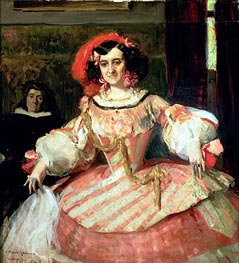
Portrait of Maria Guerrero, actress and director ... 1906
Oil Painting
$1116
$1116
Canvas Print
$90.29
$90.29
SKU: JSB-5380
Joaquin Sorolla y Bastida
Original Size: 131 x 120.5 cm
Prado Museum, Madrid, Spain
Joaquin Sorolla y Bastida
Original Size: 131 x 120.5 cm
Prado Museum, Madrid, Spain
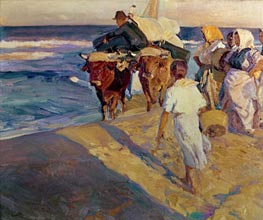
Towing in the boat, Valencia Beach 1916
Oil Painting
$1073
$1073
SKU: JSB-5381
Joaquin Sorolla y Bastida
Original Size: 91 x 122 cm
Private Collection
Joaquin Sorolla y Bastida
Original Size: 91 x 122 cm
Private Collection
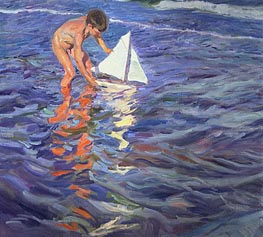
The Young Yachtsman 1909
Oil Painting
$1159
$1159
Canvas Print
$64.63
$64.63
SKU: JSB-5382
Joaquin Sorolla y Bastida
Original Size: 100 x 110 cm
Museo Sorolla, Madrid, Spain
Joaquin Sorolla y Bastida
Original Size: 100 x 110 cm
Museo Sorolla, Madrid, Spain
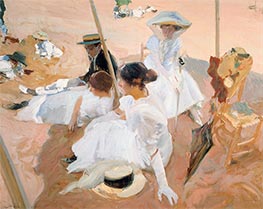
Under the Parasol, Zarauz 1910
Oil Painting
$1137
$1137
Canvas Print
$77.83
$77.83
SKU: JSB-5383
Joaquin Sorolla y Bastida
Original Size: 99 x 126 cm
Museo Sorolla, Madrid, Spain
Joaquin Sorolla y Bastida
Original Size: 99 x 126 cm
Museo Sorolla, Madrid, Spain